When a company sends an employee to Brussels or Antwerp for two months, the first instinct is usually a hotel. It is fast to book, the brand is familiar, the invoicing is clean, and someone else handles the bed-making. For a one-week trip, none of that needs reconsidering.
For two months, it does.
Beyond about thirty days, the maths and the human factors start to push in the opposite direction. The hotel becomes the expensive option, not the convenient one. The employee starts to lose productivity. The single-line invoice from the hotel begins to hide more than it shows. And the alternative — a fully furnished apartment from a corporate housing provider — starts to look like the obvious choice.
This guide is for HR managers, mobility teams and procurement professionals deciding between these two options for stays of 30 days or longer in Belgium. It covers both Brussels and Antwerp, with real 2026 prices, real cost categories, and the operational differences that actually matter in practice.
For stays under 14 days: a hotel is almost always the right choice in either city. The booking is fast, the cost is predictable, and the operational overhead of an apartment is not justified.
For stays from 14 to 30 days: it depends on the employee's role, the project budget, and whether the family is joining. Either option can work.
For stays beyond 30 days: a furnished apartment from a corporate housing provider beats a hotel on cost, on employee wellbeing, on flexibility, and on invoicing — almost without exception. The only situations where a hotel still wins past 30 days involve specific operational constraints (a single trip with constant travel, no kitchen needs, no family).
The rest of this article is the detail behind that answer, with prices and scenarios for both Brussels and Antwerp.
Hotel pricing in Brussels and Antwerp has settled at a level that surprises most HR teams when they start looking past one or two nights.
Based on current market data from booking platforms:
A 3-star hotel averages €153 per night
A 4-star hotel averages €209 to €223 per night
A 5-star hotel averages €267 to €342 per night
Hotels in the EU Quarter, near Central Station or around Avenue Louise typically sit at the higher end of each range
Over 30 days, this works out to:
3-star: €4,590 per month
4-star: €6,270 to €6,690 per month
5-star: €8,010 to €10,260 per month
Antwerp is consistently 20 to 30 per cent cheaper than Brussels for equivalent quality, but still meaningfully expensive at scale:
A 3-star hotel averages €100 to €115 per night
A 4-star hotel averages €150 to €180 per night
A 5-star hotel averages €200 to €250 per night
Hotels near Antwerpen-Centraal Station, in Eilandje, or in the diamond district typically sit at the higher end
Over 30 days:
3-star: €3,000 to €3,450 per month
4-star: €4,500 to €5,400 per month
5-star: €6,000 to €7,500 per month
These figures are for the room only. They do not include the meals, the laundry, the city tax, or the small but constant extras that hotels add to a stay.
A furnished apartment from a corporate housing provider in Belgium typically runs from:
One-bedroom: €1,200 to €2,500 per month, depending on commune and quality
Premium executive apartments in the EU Quarter, Châtelain or Uccle: €2,500 to €3,500
The lower end (€1,200 to €1,500) usually means communes outside the central five
One-bedroom: €1,300 to €2,200 per month
Premium apartments in Eilandje, Zuid or near the diamond district: €2,200 to €3,000
The Antwerp market is more compressed than Brussels — less variance between cheapest and most expensive
The price is all-inclusive in both cities: rent, utilities (electricity, water, heating), Wi-Fi, and basic services. There is no city tax on furnished mid-term rentals in either Brussels or Antwerp. There is no breakfast charge, no laundry fee per shirt, and the kitchen means the employee can choose to eat in or out.
The headline difference: at the 4-star hotel level versus a mid-range furnished apartment, the company is paying two to three times more for a hotel than for an apartment, while the employee gets a smaller space, less privacy, and no kitchen. This is true in both cities, though the absolute numbers are higher in Brussels.
Hotel quotes show a nightly rate. The actual cost of a 30-day hotel stay includes several lines that rarely appear in the initial number, and these apply to both Brussels and Antwerp.
Breakfast. Most business hotels charge €18 to €28 per person for breakfast. Over 30 days, that adds €540 to €840 to the bill if the employee takes it. If breakfast is "included" in the room rate, the rate is higher to compensate.
Other meals. A hotel guest has no kitchen. They either eat out for every meal or order room service. Room service typically marks up restaurant prices by 20 to 30 per cent and adds a service charge. A reasonable estimate for an employee eating one restaurant meal a day plus breakfast at the hotel is €45 to €70 per day in food costs — slightly lower in Antwerp than Brussels, but still €1,200 to €2,100 per month above what the same employee would spend cooking in an apartment.
Laundry. Hotel laundry in either city runs €5 to €8 per shirt, €10 to €15 per trousers. For a stay of a month, this can easily reach €150 to €250.
City tax. Brussels charges a tourist tax of €4 to €8 per night depending on the hotel category. Antwerp's city tax is €3 per person per night, lower but present. Over 30 days in a 4-star Brussels hotel this is another €180 to €240; in Antwerp, around €90.
Productivity loss. Less easy to put on an invoice but real: hotel rooms are designed for sleep, not for work. Tiny desks, shared corridor noise, no second screen, no proper kitchen for early breakfast before a 7 a.m. call. Employees on long hotel stays consistently report lower productivity and lower wellbeing than those in apartments. This is documented in mobility industry surveys and is one of the main reasons large corporates have shifted from hotel allowances to corporate housing for assignments over 30 days.
Add it all up and the realistic 30-day cost of putting an employee in a 4-star business hotel is:
Brussels: closer to €8,000 to €9,500 than the headline €6,500
Antwerp: closer to €6,200 to €7,500 than the headline €5,000
For comparison, a mid-range furnished apartment with utilities, Wi-Fi and a kitchen costs:
Brussels: €1,800 to €2,500, plus groceries (€350 to €450). Total around €2,500 to €3,500
Antwerp: €1,600 to €2,200, plus groceries (€300 to €400). Total around €2,200 to €3,000
Rent out your apartment with Globexs

Factor | 4-star Hotel | Furnished Apartment |
|---|---|---|
Brussels monthly cost (headline) | €6,270 to €6,690 | €1,800 to €2,500 |
Antwerp monthly cost (headline) | €4,500 to €5,400 | €1,600 to €2,200 |
Brussels all-in (food, laundry, tax) | €8,000 to €9,500 | €2,500 to €3,500 |
Antwerp all-in (food, laundry, tax) | €6,200 to €7,500 | €2,200 to €3,000 |
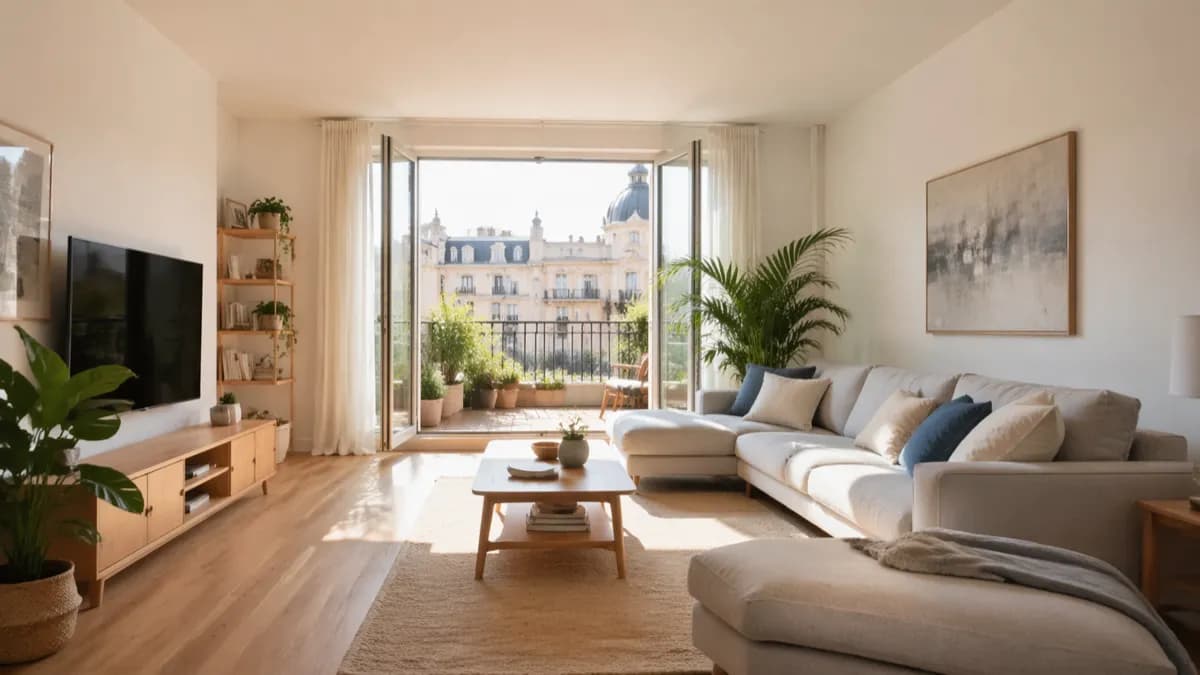
Space | One room with desk | Living room, bedroom, kitchen, often two rooms |
Kitchen | No (minibar and room service) | Fully equipped |
Wi-Fi | Shared hotel network | Dedicated apartment fibre |
Laundry | Charged per item | Washing machine in unit or building |
Privacy | Shared corridors, hotel staff entry | Private apartment, own front door |
Family suitability | Single room only | Apartments for couples and families available |
Pets | Usually no | Often possible by agreement |
City tax | Yes, €3 to €8 per night | No |
Cleaning | Daily (and intrusive) | Weekly or on request |
Invoicing | Per stay, per booking, often per employee | One all-in monthly invoice, energy included |
Contract flexibility | Cancel per hotel policy | Extend with one email; notice terms set in the contract |
Move-in time | Same day | 24 to 48 hours typical for Globexs |
Commune registration | Not handled | Possible at the address with the owner's permission |
Local support | Front desk | Local team |
The headline numbers are persuasive on their own. The operational differences — invoicing, contract flexibility, commune registration — are what make the difference for HR and finance teams managing this at scale.
This is the section most comparison articles skip. We will not.
There are situations where a hotel beats an apartment in either Brussels or Antwerp, even past 30 days:
Constant travel. If the employee is in the city Monday to Thursday and travels every weekend, the hotel's lock-and-leave simplicity (and the included cleaning) may outweigh the apartment's cost advantage.
A single, very short project. For three weeks where the employee will spend most of their time in meetings and dinners with the client, the cost of cooking and laundering doesn't apply. The hotel's services match the use case.
Specific brand programmes. Some companies have corporate hotel programmes with negotiated rates that bring the hotel cost down significantly. If your company has a heavily discounted rate at a specific chain — and they have presence in both Brussels and Antwerp — that changes the maths.
No fixed end date. If the assignment might end in 10 days or might extend to 90, a hotel's per-night billing is simpler than negotiating a flexible apartment contract.
For everything else, the apartment wins on cost and on wellbeing — in both cities.
Scenario 1 — Two-month consultant assignment in Brussels.
A management consultant from London is placed on a project at a client based near Schuman, Monday to Friday for eight weeks. She prefers cooking dinner at home, does her own laundry, and wants a proper desk for client work in the evenings. Hotel cost over the full 60 days: roughly €13,500 to €15,000 all-in. Furnished apartment in Ixelles cost: roughly €4,800 to €5,500 all-in, including groceries and one dinner out per week. The apartment saves the company nearly €10,000 and the consultant prefers it.
Scenario 2 — Six-month engineering team to Antwerp port.
Five engineers from Hamburg are assigned to a project at the BASF site in the Antwerp port area for six months. The company is considering a corporate hotel block versus furnished apartments. Hotel block of five 4-star rooms in Antwerp at €170 per night: approximately €153,000 over six months (about €5,100 per employee per month). Furnished apartments — five one-bedroom units in Eilandje and Centrum, all-in: approximately €54,000 to €66,000 (€1,800 to €2,200 per employee per month). Savings: roughly €87,000 to €99,000. The team also has space for occasional family visits during the assignment.
Scenario 3 — One-week diplomatic delegation in Brussels.
A delegation of four people from an embassy is in Brussels for five days of meetings at the EU institutions. Furnished apartment booking is technically possible but operationally pointless — at five days, the apartment provider's setup cost is not amortised, and the embassy's protocol requires hotel-level concierge services. The hotel is the right choice. The apartment makes sense from week three onwards.
Three issues come up repeatedly when companies switch from hotel to apartment for the first time, whether in Brussels or Antwerp.
Lease structure. A furnished apartment from a corporate housing provider should be on a 1 to 11 month contract — not a 12-month standard residential lease. Belgian residential leases are not designed for mid-term corporate stays. A proper corporate housing provider works on its own terms with clean termination clauses, not standard Belgian tenancy law.
Commune registration. Anyone staying in Belgium over a certain period must register with the local commune within 8 days of arrival. A hotel guest does not need to do this. An apartment guest does. A corporate housing provider should handle the registration paperwork as part of the service — if they don't, that's a sign of an amateur operator. This applies in every Belgian commune, whether the assignment is in Schaerbeek, Ixelles, Antwerp-Centrum or Berchem.
All-in invoicing. For finance and procurement teams, the most valuable difference is invoicing. Five hotel rooms across two months means up to ten separate hotel invoices, each with different reference numbers, dates, taxes and currencies. A furnished apartment from Globexs comes with one all-in monthly invoice on a fixed date: rent and energy together, with no separate utility bills. This alone justifies switching for teams managing more than 3 to 5 active assignments at a time.
In most cases, the hotel-vs-apartment maths works the same way in both cities. The apartment wins decisively past 30 days. But there are city-specific factors worth knowing.
In Brussels, the price gap between hotel and apartment is wider in absolute terms (because hotels are more expensive). This means the apartment switchover happens slightly earlier — around day 10 to 14 versus day 14 to 21 in Antwerp. Brussels also has more apartment inventory per commune, which gives more flexibility on location and price points.
In Antwerp, the absolute hotel cost is lower, so the cost case for switching to apartment is less dramatic — though still significant past 30 days. Antwerp's commercial map (port, diamond district, chemical industry) means most corporate placements are clustered around specific zones (Eilandje for port and creative industries, Zurenborg/Berchem for diamond industry families, Linkeroever for chemical industry), and apartment inventory in these zones is sometimes tighter than in Brussels.
For multi-city assignments where an employee splits time between Brussels and Antwerp, the right answer is usually a furnished apartment in each city booked with the same provider in both cities.
Globexs (Global Expatriate Services SL) has worked in the Belgian market for over twenty years. Our furnished apartment contracts run from 1 to 11 months, with one all-in monthly invoice for HR and mobility teams, energy included with no euro cap, registration with the commune possible when the owner agrees, and check-in the same or next day once the contract is signed and paid, for assignments in Brussels and Antwerp.
The kind of placements where the apartment-over-hotel maths becomes obvious — extended assignments, teams of any size, family relocations, sports placements during transfer windows — is the work we do every day.
If you are weighing a hotel block against a furnished apartment solution for an upcoming assignment in Belgium, we can run the numbers with you using your specific dates and headcount.
At what stay length does a furnished apartment become cheaper than a hotel?
For 4-star hotels in Brussels, the break-even point with a mid-range furnished apartment is around 10 to 14 days when comparing headline costs only. In Antwerp, it shifts to 14 to 21 days because Antwerp hotels are cheaper. When you include food, laundry, city tax and the productivity factor, the apartment is cheaper from day 7 to 10 onwards in Brussels and day 10 to 14 in Antwerp.
How is corporate housing with Globexs invoiced?
Each stay comes with one all-in monthly invoice covering rent and energy, issued on a fixed date. Companies with staff in both Brussels and Antwerp work with the same provider and the same invoicing cycle in both cities.
What happens if the assignment ends early?
Furnished apartment contracts from corporate housing providers typically allow 30-day notice termination, not the 3-month notice of standard Belgian residential leases. Specific terms depend on the provider — agree upfront.
Does the employee need to register at the commune for a furnished apartment stay?
Yes, for stays over 3 months. A proper corporate housing provider handles the paperwork in any Belgian commune. Stays under 3 months may be exempt, but check with the provider.
Can we use a furnished apartment for an employee bringing family?
Yes. Two-bedroom and three-bedroom furnished apartments are available in both Brussels and Antwerp. Hotel rooms cannot accommodate families on assignments above a few days.
Is the apartment ready when the employee arrives?
For Globexs, yes — fully furnished, with utilities, Wi-Fi, kitchenware and linens active from day one. The standard is 24 to 48 hour move-in in both cities. The employee can walk in with a suitcase and work the next morning.
What about cleaning?
Cleaning is typically weekly or on request, included or paid separately depending on the provider. This compares favourably to daily hotel housekeeping, which many guests on long stays find more intrusive than helpful.
The decision between hotel and furnished apartment for corporate stays in Belgium is rarely close once the stay goes past 30 days, whether the assignment is in Brussels or Antwerp. The cost difference is large, the employee experience is better, and the all-in monthly invoice and flexible contracts makes the apartment option easier to manage at scale.
For HR and mobility teams who have always defaulted to hotels because that's what's familiar — the maths is worth running. Most of the time, the apartment wins, and not by a small margin.