When a company sends a team of technicians, installers or construction specialists to Belgium, the project schedule is usually fixed before anyone thinks about where those people will sleep. Then reality hits. Hotels near Brussels cost a fortune for stays longer than a week, holiday rentals refuse groups of workers, and the regular rental market wants one-year contracts, Belgian payslips and a domicile registration. Meanwhile the team arrives in three weeks.
This guide explains how worker accommodation actually works in Belgium, what it costs, where the practical locations are, and what to check before you sign anything.
Belgium is a country of projects. The Port of Antwerp-Bruges is one of the largest ports in Europe, Brussels hosts constant construction and renovation work, and the corridor between the two cities is full of logistics hubs, industrial sites and infrastructure projects. Companies from the Netherlands, Germany, France, Poland, Portugal and Spain regularly post teams here for two to six months at a time.
The typical request we see looks like this: a company needs to house four to eight employees, all adults travelling without families, for a defined project period. They need single beds, because colleagues do not share beds. They need parking, because the team travels with vans and tools. They need wifi, a real kitchen and a washing machine, because these are people living a normal working life, not tourists. And the company needs one contract and one invoice, because nobody in the finance department wants to process eight separate rental agreements.
Standard rental platforms are built for none of this. That is why worker accommodation exists as its own category.
A proper worker house or team apartment in Belgium has a specific profile:
Single beds only. A four-bedroom house with two single beds per room sleeps eight colleagues comfortably. A house with double beds sleeps four, and the price per person doubles. Always check the bed configuration, not just the bedroom count.
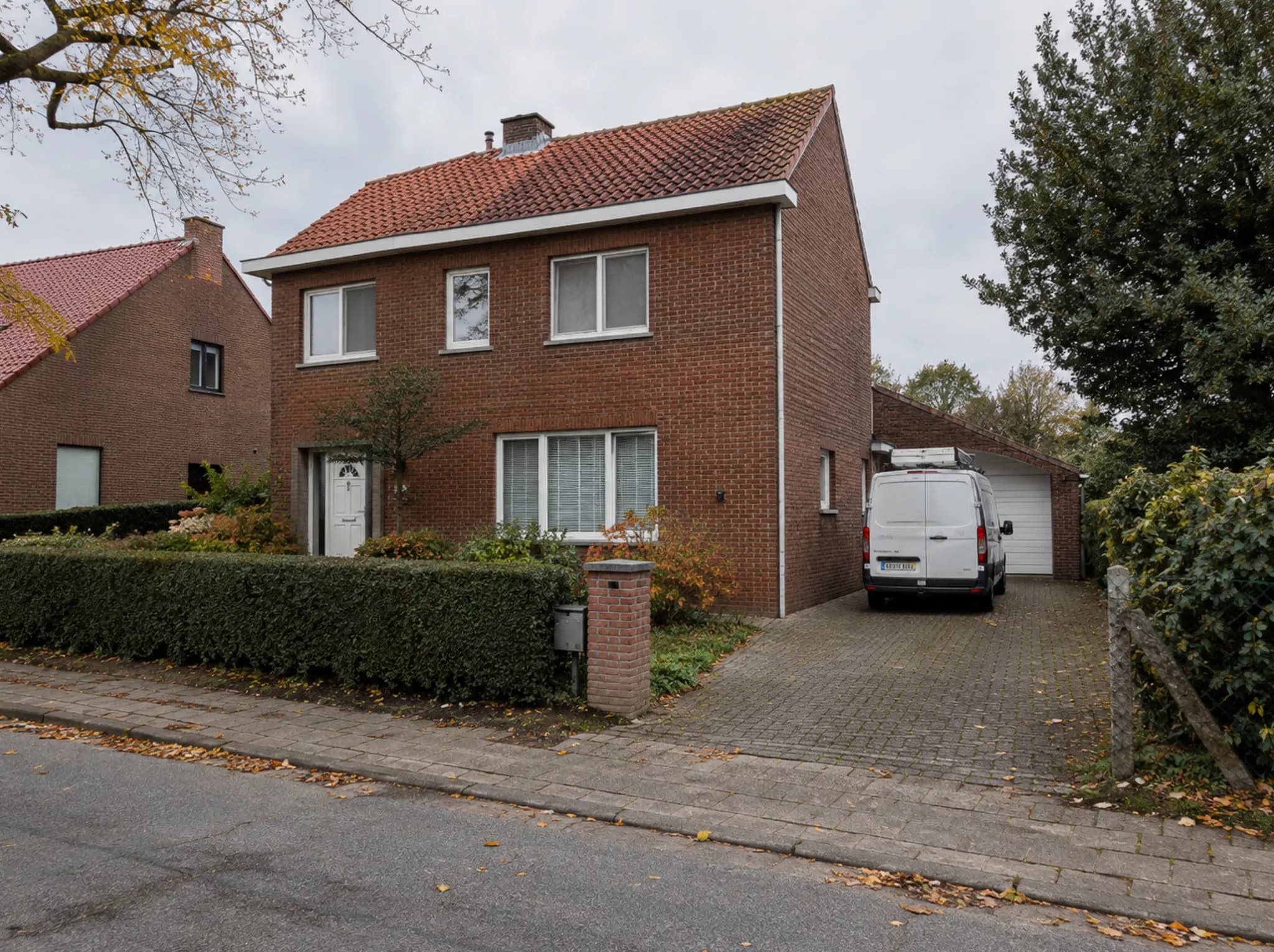
Free private parking. Street parking in and around Brussels is restricted, paid or reserved for residents in most municipalities. A house with a garage or private driveway saves your team daily stress and real money in parking fines.
Fully equipped for daily life. Bed linen, towels, washing machine, dryer, dishwasher, a kitchen with actual appliances. Workers on a five-month posting cook, do laundry and live. If a listing does not mention linen and a washing machine, ask.
Flexible contracts from 1 to 11 months. Project timelines slip. A good provider lets you extend month by month instead of locking you into a fixed end date or a full-year lease.
One invoice to the company. The contract is signed by the employer, the invoice goes to the employer, and individual employees do not need Belgian bank accounts, payslips or credit checks.
Here is something many companies get wrong on their first Belgian project. They search for housing in Brussels city, pay city prices, and then discover their team spends every morning stuck in traffic on the Ring.
For working teams, the villages and small towns of Flemish Brabant, just north and west of Brussels, are usually the better choice. Places like Meise, Humbeek, Asse and the surrounding municipalities sit within 20 to 30 minutes of central Brussels by car, with quick access to the Ring road, the A12 towards Antwerp and Brussels Airport in Zaventem. Teams working on sites in Brussels, at the port, at the airport or anywhere along the Brussels-Antwerp corridor reach their work faster from these locations than from many neighbourhoods inside the city.
The practical advantages stack up:
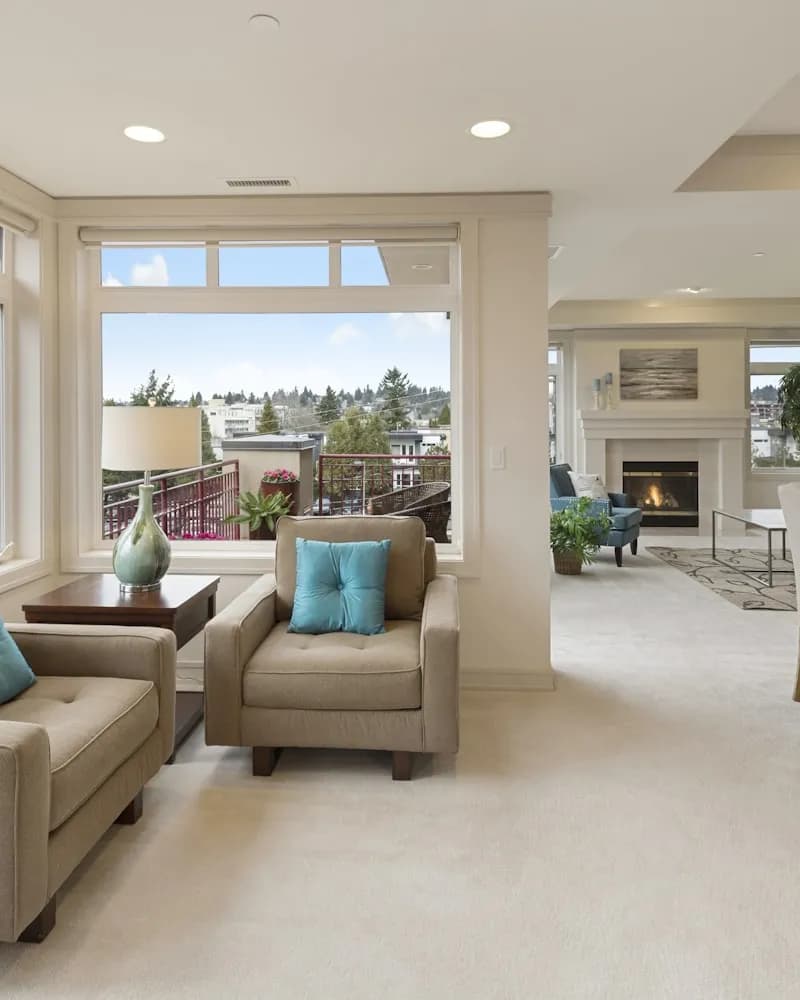
Space. Outside the city you get houses with 3 or 4 bedrooms, gardens, terraces and garages for the price of a two-bedroom city apartment.
Parking. Private parking is standard in the suburbs and rare in the city.
Quiet. After a ten-hour shift, a house in a village beats an apartment above a busy street.
Connections. Meise is walking distance from the 92-hectare Botanic Garden and sits right off the A12. Humbeek lies on the canal between Brussels and Antwerp, positioned almost exactly between the two cities. Asse has a direct rail connection into Brussels for team members without a car.
Rent out your apartment with Globexs

Companies whose employees work shifts at the port or the airport should look specifically at this northwestern belt. Companies with projects on the southern side of Brussels should look at Halle and the towns along the E19 instead, and apply the same logic.
Prices for team accommodation near Brussels depend on capacity, condition and length of stay. As a realistic orientation for the current market:
A furnished house for 4 people in Flemish Brabant starts from around €2,950 per month, all-in.
A larger team apartment or house for 5 people starts from around €4,300 per month.
Houses sleeping 8 people are quoted individually, because supply is limited and dates matter.
Shorter stays of one or two months are priced higher per month than stays of three months or more. Check exactly what the monthly price includes. At Globexs, prices in Belgium are all-in, with energy included and no euro cap, and any one-time fees are listed in the written offer. A serious provider puts all of this in writing before you commit, so the finance department sees the full cost of the posting in one document.
Compare that to the alternative. Eight employees in hotel rooms near Brussels at even a modest corporate rate cost more per week than a full house costs per month, and the team eats restaurant food three times a day because there is no kitchen.
Housing is only one part of posting workers to Belgium. Employers sending staff from abroad deal with the Limosa declaration for posted workers, A1 social security certificates for EU employees, and in some sectors mandatory registration systems for construction site presence. Your accommodation provider is not your legal advisor, but an experienced one will have seen these processes hundreds of times and can tell you which questions to ask.
Two housing-specific points deserve attention:
Registration. For stays under a few months, employees typically do not register as residents at the address. For longer postings, check with the local municipality what applies to your situation, because rules differ between communes.
Contracts and notice. Belgian residential lease law is protective and rigid, which is exactly why temporary furnished contracts through a specialised agency are the standard route for corporate stays. The contract should state the exact dates, the extension procedure and the notice terms in plain language.
The worker housing market attracts serious operators and also some very unserious ones. Before wiring a deposit for a house you have only seen in photos, run through this list:
Ask for the exact address and check it on a map. Measure the real driving time to your project site at 07:00 on a weekday, not on a Sunday afternoon.
Confirm the bed setup in writing. Number of single beds, per room.
Ask who your contact is during the stay. When the boiler fails in week three, you want a phone number that answers, in English.
Check how long the company has existed. An agency that has operated in Belgium for two decades has survived every kind of tenant, owner and project delay. A listing that appeared last month has not.
Ask for the full cost breakdown. Rent, utilities, linen, agency fee, deposit, in one document.
At Globexs we have been placing international employees and teams in Belgium and Spain since 2002, and most of the calls we get from new corporate clients start with a story about a previous arrangement that went wrong on exactly one of these five points.
To make this concrete, here is how a team relocation to the Brussels area normally runs when it runs well:
The company sends the basics: how many people, which dates, where the project site is, whether they need parking for vans.
The provider replies with two or three matching houses, real photos, exact locations and a full quote per house.
The company picks one, signs a single contract, receives a single invoice.
The team lands, picks up keys, and sleeps in made beds the same evening. Wifi works, the kitchen is stocked with equipment, the vans are parked in the driveway.
When the project extends by six weeks, the company sends one email and the contract extends.
That last point matters more than it seems. Projects in construction and industry rarely end on the planned date. The difference between a provider who extends with one email and a landlord who has already promised the house to someone else can decide whether your team finishes the job or commutes from a hotel 40 kilometres away for the final month.
A team that lives well works well. A few practical things employers can arrange or simply point their people towards:
Supermarkets. Colruyt is the cheapest full-range chain in Belgium and every town in Flemish Brabant has one. Aldi and Lidl fill the gaps.
Transport. For team members without a car, De Lijn buses connect the villages to Brussels, and Asse and Meise have direct connections into the city.
Community. Expat groups on social media are an underrated resource for practical questions, from where to find a Polish shop to which doctor speaks English. We run one of the larger Facebook groups for expats living and working in Brussels, and posted workers use it daily.
Worker accommodation near Brussels is a solved problem if you approach it as a corporate purchase rather than a holiday booking: define capacity and dates, choose location by real commute time rather than by postcode prestige, insist on single beds and parking, and sign one flexible contract with one accountable provider.
If you are relocating a team to Belgium and need a furnished house or team apartment near Brussels on a single company invoice, this is exactly what we handle at Globexs. Send us your dates and team size, and we will come back with available options and a complete quote.