Belgian rental law was written for people who move in and stay for years. If you are coming for six months, a year or an open-ended project, the standard options can feel like a poor fit: a nine-year lease you will leave early, or a short-term lease that still expects you to buy a sofa. This guide compares a mid-term rental vs a standard lease in Belgium: how the 3-6-9 lease and the short-term lease work, what the deposit and registration rules are in Brussels and Flanders, where furnished apartments sit in all this, and which option suits which kind of stay.
Choose by how long you are staying and how much you want to set up yourself.
Under 12 months, or an end date you do not know yet: a furnished mid-term rental with a fixed contract of 1 to 11 months.
One to three years, and you are happy to furnish a home: a short-term lease.
Three years or more, or you are moving with family for good: a standard nine-year lease.
Housing law is regional in Belgium: Brussels, Flanders (Antwerp, Ghent) and Wallonia each have their own rules. The structure is similar; the details are not.
A lease for your main residence in Belgium runs for nine years by default. If the contract says nothing about duration, or states a term between three and nine years, the law treats it as a nine-year lease.
The name 3-6-9 comes from the three-year periods at which the landlord may end the lease on grounds set by law, such as moving in personally, major works, or ending it without a reason against compensation. The tenant has much more freedom:
You can leave at any time with three months' notice.
In the first three years you also pay an indemnity: three months' rent in year one, two in year two, one in year three. After that, notice alone is enough.
For a newcomer staying a year or two, that indemnity is the real cost of choosing the "wrong" lease.
A short-term lease is a main-residence lease of three years or less, in writing. It suits people who know they will stay a defined period, but it has strict rules on renewal and conversion.
Brussels | Flanders (Antwerp, Ghent) | |
|---|---|---|
Maximum total length | 3 years, including renewal | 3 years, including renewal |
Renewal | Once only (leases from 1 November 2024) | Once, on the same conditions |
Ending at the agreed date | Notice at least 3 months before the end | Notice at least 3 months before the end |
If nobody gives notice, or you stay on | Converts to a 9-year lease from the original start date | Converts to a 9-year lease from the original start date |
Tenant leaving early | 3 months' notice plus 1 month's rent | 3 months' notice plus 1.5, 1 or 0.5 months' rent in year 1, 2 or 3 |
The conversion rule catches people out. If you intend to leave at the end of a short-term lease, send notice on time and keep proof, usually by registered letter. Otherwise you may find yourself holding a nine-year lease you never meant to sign.
The rental deposit in Belgium is capped by law and cannot simply be handed to the landlord. It is usually placed in a blocked account in the tenant's name, released only with both parties' agreement or a court decision.
Region | Maximum deposit | Main forms allowed |
|---|---|---|
Brussels (leases from 1 November 2024) | 2 months' rent, excluding charges | Blocked account in the tenant's name, bank guarantee, guarantee via the CPAS/OCMW; not in cash |
Flanders (leases from 1 January 2019) | 3 months' rent | Individual account in the tenant's name, bank guarantee, guarantee via the OCMW |
Wallonia | 2 months' rent | Blocked account, bank guarantee or public guarantee |
In Brussels the landlord must release the deposit within two months after the keys are returned. A blocked account usually needs a Belgian bank, which is one of the first obstacles for new arrivals: see our guide to renting without a Belgian bank account.
A written residential lease in Belgium must be registered by the landlord within two months of signing, free of charge, through the federal MyRent service. In Brussels, since 1 January 2025, landlords also register leases in a separate regional system; the federal obligation still applies.
Rent out your apartment with Globexs

Registration matters to you as a tenant. It gives the lease a fixed date, which protects you if the property is sold. And if the landlord fails to register, the law gives the tenant an exit: in Flanders, for example, you can then end the lease without notice or indemnity (not in the first two months after signing). You may also register the lease yourself.
Do not confuse this with registering your address at the commune, which is what gets you an eID. That is a separate procedure, and whether you can do it depends on the landlord's agreement: see our commune registration guide.
Furniture does not change the legal category of a lease. If the apartment is your main residence, the regional main-residence rules apply whether it is furnished or empty.
What changes is the practical side. An unfurnished lease means buying or renting furniture, opening energy and internet contracts in your name and arranging the meter readings, then undoing all of it when you leave. For a stay of a few months, that set-up can cost more time than the stay is worth.
A lease for a home that is not your main residence, for example a temporary base while your home stays abroad, falls under general rental law, where the terms of the contract carry more weight. In Flanders such a lease has to state clearly that both parties exclude main-residence use.
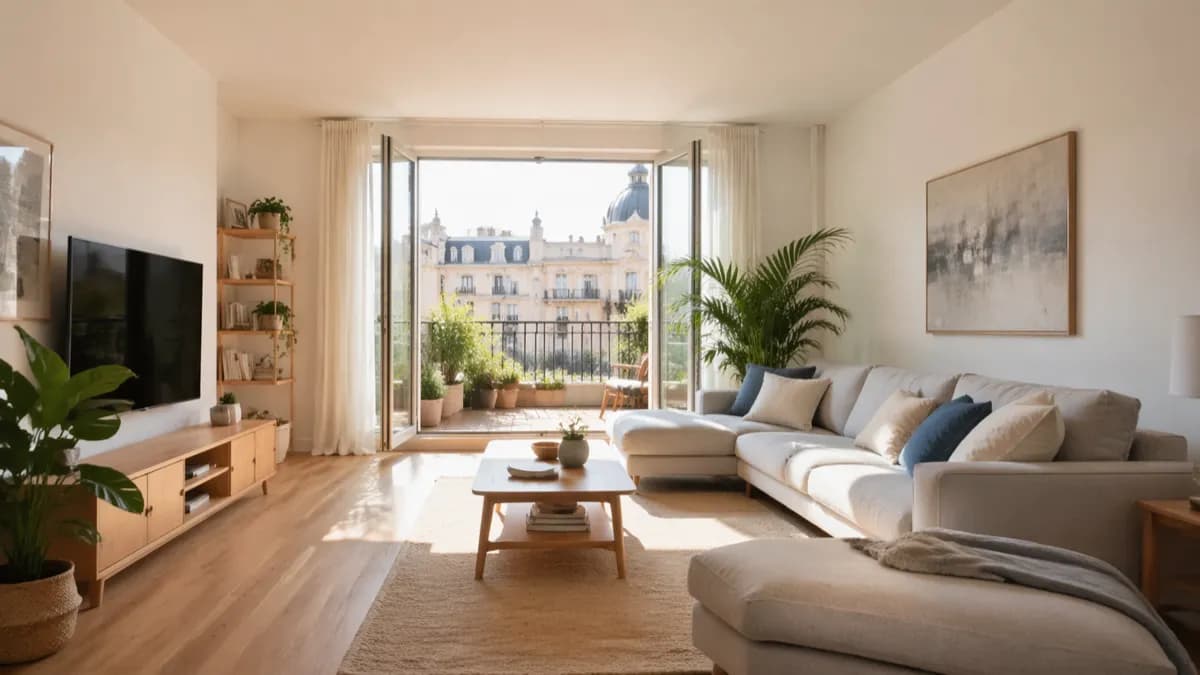
A mid-term furnished rental is an apartment ready to live in, rented for a fixed period of one to eleven months, usually with utilities included. It fills the gap between a hotel and a standard lease.
The difference is what you do not need to arrange: no furniture, no energy contracts, no nine-year exit plan. You agree an end date that matches your project or trial period, and extend it if plans change. The trade-off is the monthly price, which is higher than the rent of an empty apartment on a long lease because it covers furniture, energy and flexibility.
Standard 3-6-9 lease | Short-term lease | Mid-term furnished rental (Globexs) | |
|---|---|---|---|
Length | 9 years by default | Up to 3 years | 1 to 11 months |
Leaving early | 3 months' notice, indemnity in years 1 to 3 | 3 months' notice plus indemnity | Fixed end date agreed at signing |
Staying longer | Runs on automatically | One renewal, then conversion to 9 years | Extension by one email |
Deposit cap | 2 months (Brussels) or 3 months (Flanders) | Same as standard lease | Set in the contract |
Furniture | Usually unfurnished | Usually unfurnished | Fully furnished |
Energy | Contracts in your name | Contracts in your name | Included in the all-in price |
What landlords ask for | Often payslips, employment contract, Belgian account | Same | ID only for private tenants; no Belgian bank account |
Commune registration | Normally yes, it is your main residence | Normally yes | Possible with the owner's written permission |
Best for | Settled, long stays | Stays of 1 to 3 years | Projects, trial periods, first months in Belgium |
Four questions decide it.
How long are you staying? Under a year points to mid-term. Over three years points to a standard lease. In between, compare the short-term lease with a mid-term rental plus an extension.
Do you need to register with the commune? If you need an eID, a lease for your main residence is the standard route. With a furnished rental, ask before signing whether the owner agrees to registration.
What does the budget cover? A long lease has lower monthly rent, but add furniture, energy set-up, the deposit and the cost of leaving early. A mid-term rental costs more per month and almost nothing to start or end.
How certain are your plans? If the project might end early or run over, a fixed 1-to-11-month contract with easy extension carries less risk than a lease with indemnities.
A common path: start in a furnished mid-term apartment, learn the city, then sign a long lease in the neighbourhood you actually want.
Globexs has provided furnished mid-term housing since 2002, in Belgium and Spain. In Belgium we rent furnished apartments in Brussels, Antwerp and Ghent on contracts from one to eleven months.
All-in price: one monthly amount that includes energy, with no cap in euros on consumption.
Antwerp from EUR 1,300 a month, Ghent from EUR 1,500 a month.
Extension by one email, for private tenants and companies alike.
Registration with the commune is possible when the owner agrees: send a written request to your rental agent, we ask the owner and tell you the decision. The price, contract and deposit stay the same.
From private tenants we need an ID only; no Belgian bank account.
Corporate housing across Belgium · Brussels · Antwerp · Ghent · How renting with Globexs works
It is the standard nine-year lease for a main residence. The landlord can end it early only on legal grounds, mostly at the three-year marks. The tenant can leave at any time with three months' notice, plus an indemnity in the first three years.
Yes, as a short-term lease of up to three years. Give notice at least three months before the end date, or the lease may convert into a nine-year lease from its original start.
In Brussels, up to two months' rent for leases signed from 1 November
In Flanders, up to three months' rent for leases since 1 January
In Wallonia, up to two months. It usually goes into a blocked account in the tenant's name.
The landlord, within two months of signing, free of charge. In Brussels the lease is also registered in a regional system since 2025. The tenant can register it too.
Yes, if it is your main residence. Furnishing does not change the legal category of the lease; how you use the home does.
It depends on the owner. At Globexs, registration is possible with the owner's written permission; ask your rental agent in writing before you sign.
With a Globexs contract of 1 to 11 months, you extend by sending one email. If you then decide to stay in Belgium for years, a standard lease becomes the better value.