Corporate housing in Ghent is a different problem from Brussels or Antwerp. The city is smaller, the furnished market is thinner, and the demand comes from a handful of very large industrial employers rather than from an institutional quarter. If you are placing an engineer at the port for six months, or a project team at a plant in the canal zone, the answer is rarely a city-centre apartment. This guide is for HR and mobility teams deciding where in Ghent to put someone, and what to expect once they arrive.
Ghent is not a satellite of anywhere. It has its own industrial base, and the scale of it surprises people who know Belgium only through Brussels and Antwerp.
Volvo Car Gent is the largest private employer in East Flanders, with around 6,500 staff, and the plant completed its shift to full electric production in
Volvo Cars and Volvo Trucks both chose Ghent for their European battery production. ArcelorMittal Ghent runs Belgium's only flat carbon steel plant, with roughly 4,700 employees.
Around them sits the canal zone of North Sea Port, which handled 71.4 million tonnes of cargo in 2023 and is now absorbing a multi-billion-euro pipeline of green hydrogen, circular chemistry and battery investment. That pipeline is what generates most corporate housing demand here: commissioning teams, process engineers, specialist contractors, arriving for a defined project and leaving when it closes.
The second source is biotech. The Zwijnaarde science park south of the city has become one of Europe's more productive translational biotech clusters, and Ghent University is one of the largest universities in Belgium. Between them they bring in researchers, visiting academics and staff on fixed-term contracts.
Ghent is roughly half an hour from Antwerp and half an hour from Brussels by train. That geography does real work for a mobility team.
A project that touches both the Port of Antwerp and the Ghent canal zone can be housed once, in Ghent, rather than twice. A consultant working in Brussels four days a week but living on a Ghent budget is a common arrangement. And when Antwerp runs tight — which it does, around the turnaround seasons — Ghent is usually the nearest place with availability rather than the nearest place with a hotel.
This is the practical argument for Ghent that HR teams tend to discover late: it is the flexible point of the triangle.
Ghent splits cleanly into three kinds of location, and the right one depends entirely on where the person actually works.
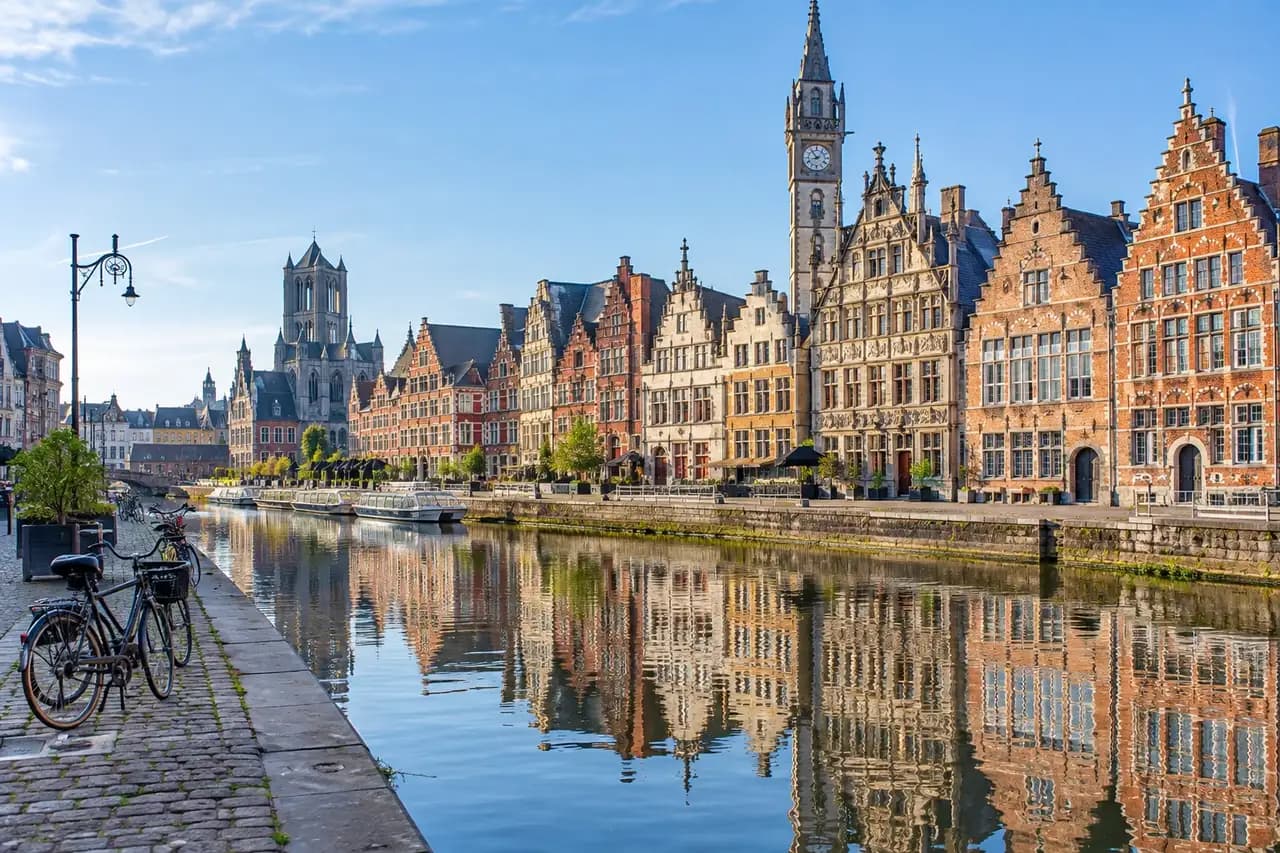
The historic centre and Zuid. Walkable, dense, well served by tram, and the obvious answer for someone commuting to the university, to Zwijnaarde by public transport, or into Brussels by train. Furnished supply here is the tightest in the city.
The inner ring — Sint-Amandsberg, Gentbrugge, Ledeberg. Residential, five to fifteen minutes from the centre, and where most of the family-sized furnished stock sits. This is usually the answer for someone bringing a partner or staying longer than six months.
Rent out your apartment with Globexs

The canal zone and the north — Wondelgem, Evergem, Zelzate direction. Close to the port and the plants, with parking, and the practical answer for shift work and for teams arriving with vans. Nobody chooses this for the view; they choose it because the commute at 6am is ten minutes instead of forty.
A useful rule: ask where the person clocks in before asking what kind of apartment they want.
Two things make Ghent behave differently from Antwerp and Brussels.
The first is size. The furnished mid-term stock in Ghent is genuinely smaller, so the gap between "we have something" and "we have nothing" is narrower than in a bigger market. A request with four weeks' notice is comfortable. A request for three apartments starting Monday is a real question rather than a formality.
The second is the university. Ghent University and the colleges around it bring a large student intake into the same city every September, and that intake competes for the same furnished supply at the same moment.
September is the tightest month across Belgium: projects restart after the summer holidays, and in Ghent the new academic year arrives at the same time. If the start date is in September, start the housing search in July.
For a mobility team weighing the three, the short version:
Brussels if the work is institutional — EU bodies, NATO, international organisations, consultancies serving them. The commute matters more than the apartment, and the EU quarter sets the geography.
Antwerp if the work is at the port, in petrochemicals, in the diamond district or in fashion. The demand is large, and so is the supply, but it moves in waves around project cycles.
Ghent if the work is at the canal zone, at Volvo or ArcelorMittal, in biotech, or at the university — or if the person needs to reach both Antwerp and Brussels regularly without living in either.
More detail on the other two cities: Corporate housing in Antwerp · Corporate housing in Brussels
Language. Ghent is Dutch-speaking. English works in the workplace, in the university and in most of the centre, but the commune, the utility providers and the neighbours will default to Dutch. This matters more here than in Brussels.
Commuting without a car. Ghent has a dense tram network and the centre is largely car-restricted. For a placement in the centre, a car is often a liability rather than an asset. For the canal zone it is the opposite.
Registration with the commune. Anyone staying longer than three months in Belgium is required to register with the local commune; without it there is no eID and usually no Belgian bank account. Globexs apartments can be used as a registered address when the owner agrees: send a written request to your rental agent and we obtain the owner's written permission. Registration does not change the rent, the contract or the deposit. Full guide: registering with the commune in Belgium.
Groups. Teams arriving together are usually better served by a house with individual bedrooms than by several separate apartments — one address, one set of keys, one point of contact.
Tell us where the person will be working, when they arrive, and how long the assignment runs. The work location does more to narrow the answer than any other detail, and in Ghent it narrows it a lot.
See what is currently available: furnished rentals in Ghent. For placements across more than one Belgian city, the overview is here: corporate housing across Belgium.
A furnished apartment or house rented to a company rather than to an individual, for the length of an assignment rather than on a standard Belgian lease.
In the canal zone or the northern districts — Wondelgem and towards Evergem and Zelzate — where parking is available and the commute is short. The city centre is a poor fit for shift work at the port.
Yes. Ghent is roughly half an hour from each by train, which makes it the practical answer when a project touches both cities.
Four weeks is comfortable. Ghent's furnished stock is smaller than Antwerp's or Brussels', so short-notice requests for several apartments at once depend on what is standing empty that week.
Not for work or daily life in the centre, where English is widely used. The commune, utilities and most neighbours will default to Dutch.
Yes. For groups arriving together we generally place them in a house with individual bedrooms rather than in separate apartments.
From one to eleven months. Belgian law treats longer leases under a different regime.
No. The company is the contracting party and receives the invoice.