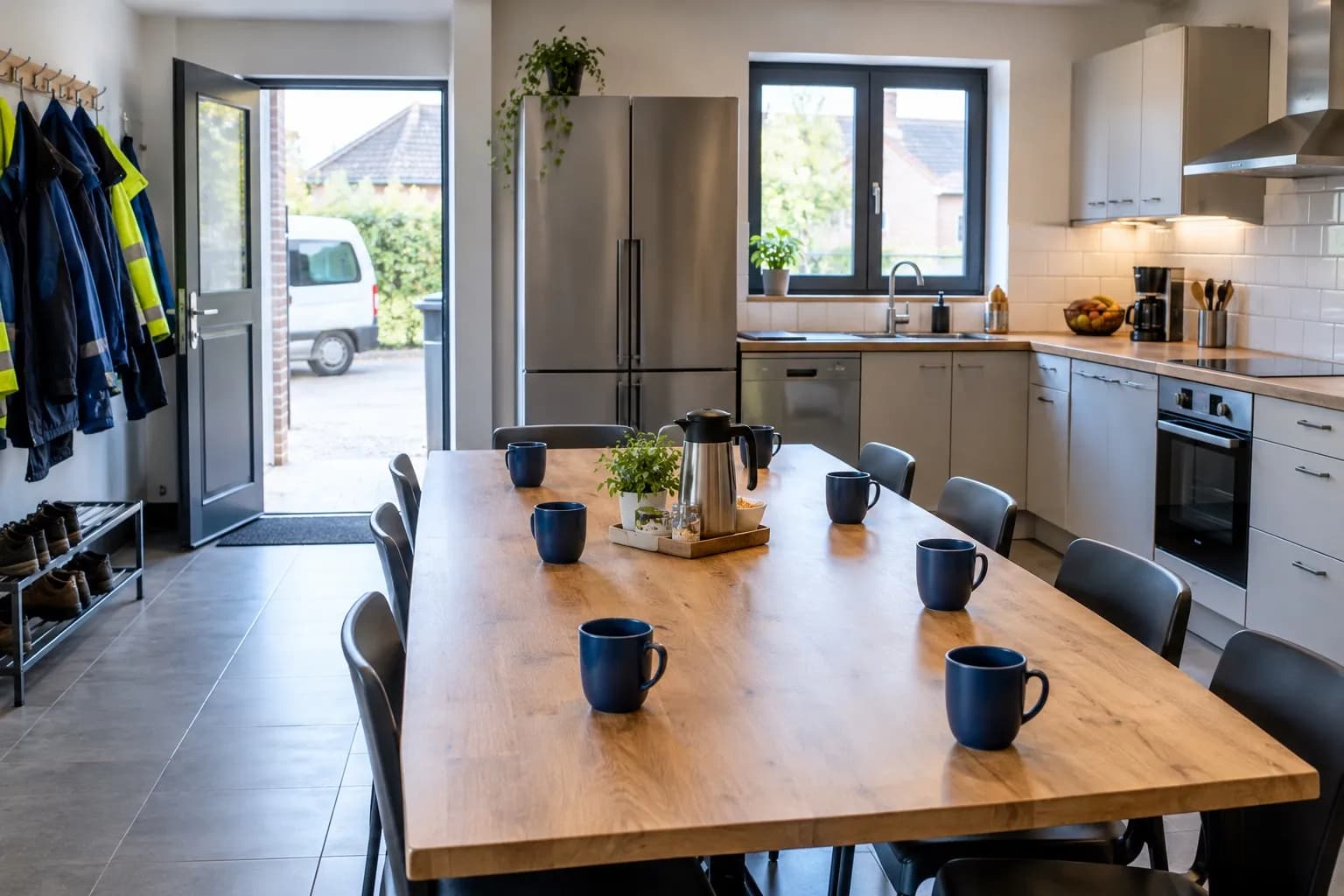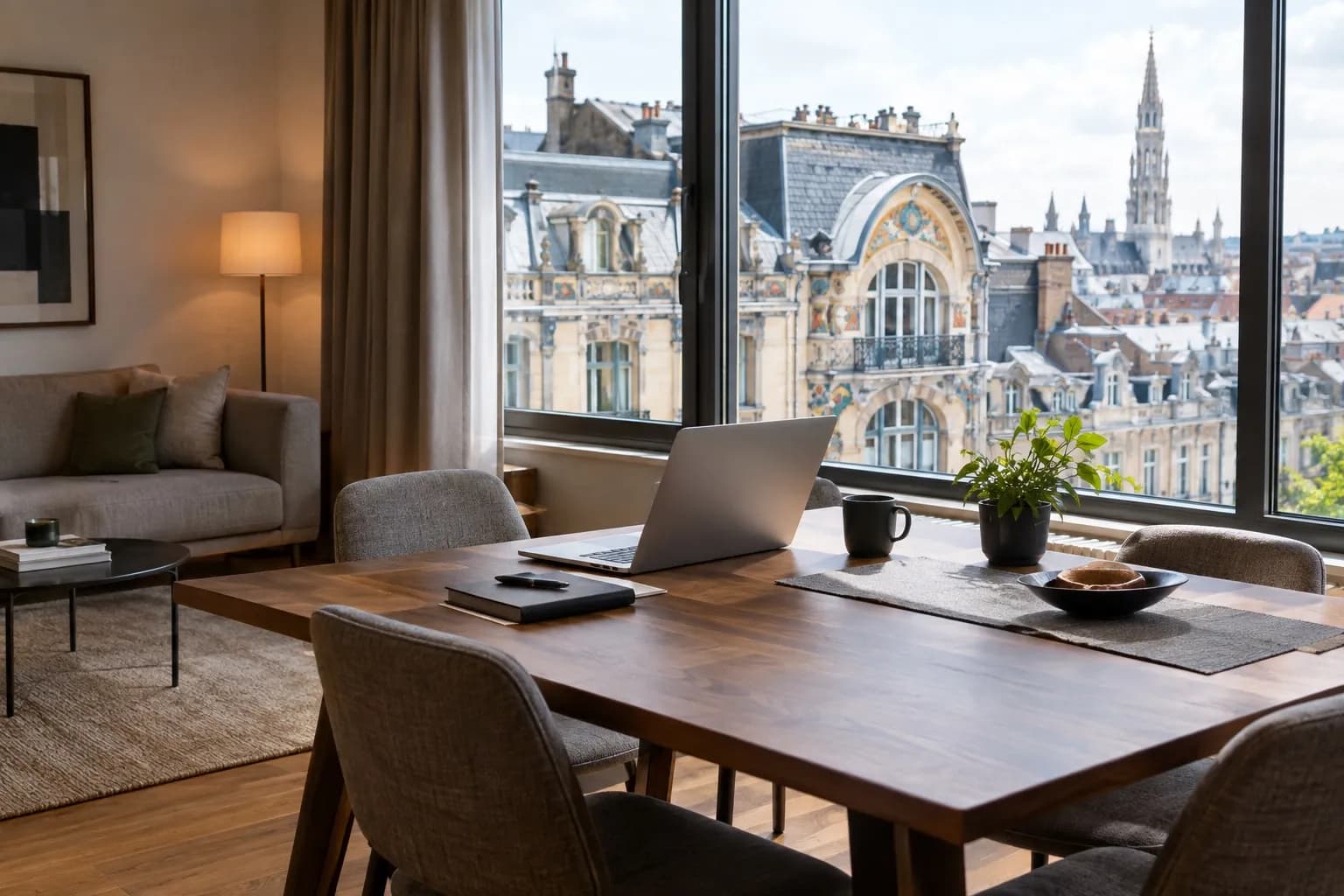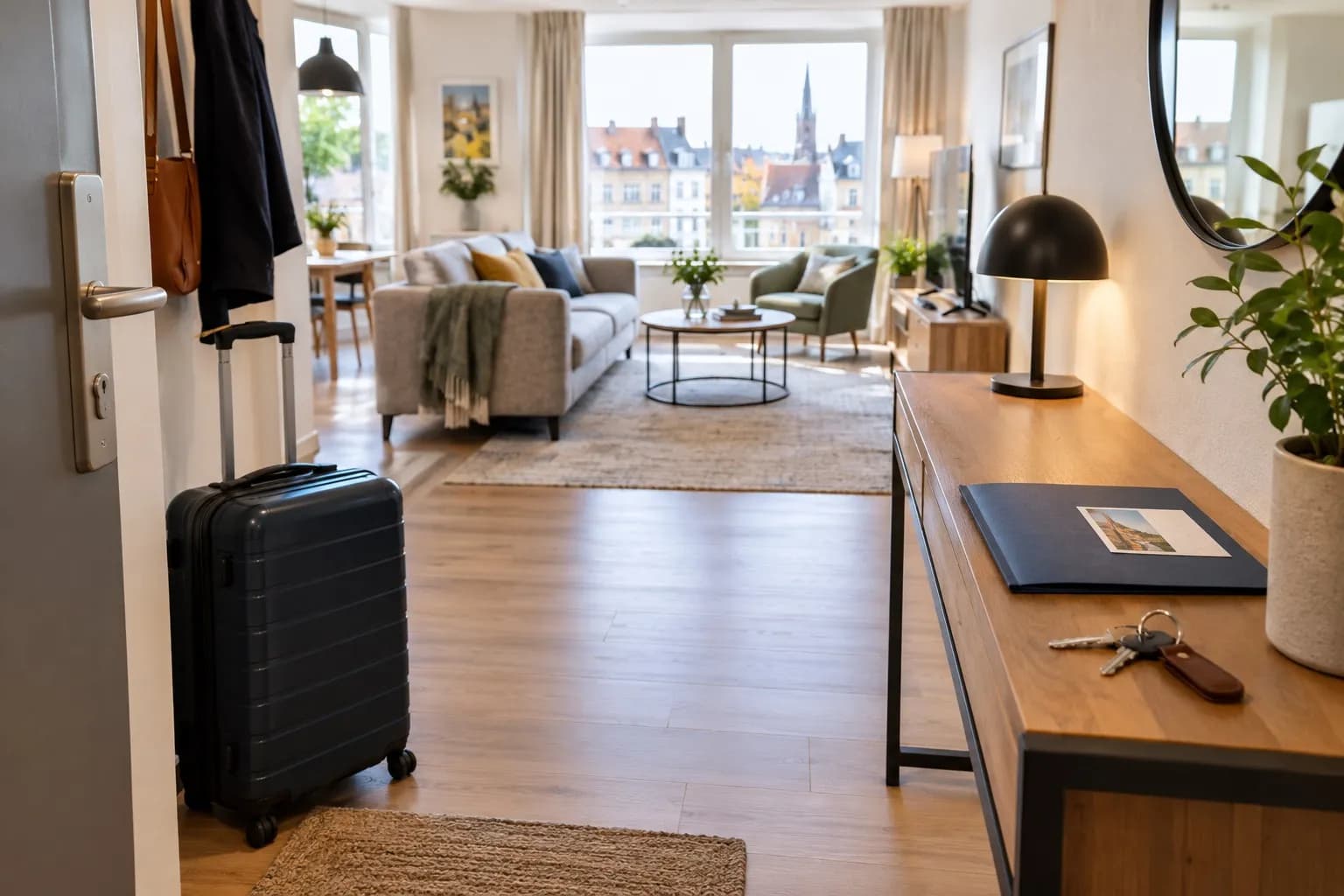
Temporary housing for employees in Belgium comes down to four options: a hotel, an aparthotel, a furnished mid-term apartment or a standard lease. Each one fits a different length of stay, a different team size and a different amount of work for the company. This guide is for HR, mobility and project managers who need to house one employee or a whole team in Brussels, Antwerp or Ghent, and want to choose the right option before the first booking rather than after the second extension.
The four options at a glance
A hotel suits stays of days, a lease suits stays of years, and most corporate assignments fall somewhere in between.
Hotel. Booked per night, cleaned daily, nothing to set up. It works for short trips and for people who travel every week. For a stay of several weeks, a single room without a kitchen becomes the main complaint.
Aparthotel or serviced apartment. A hotel-style building with small apartments, reception and regular cleaning. A step up in space, usually priced per night or per week, and often the answer for stays of two to four weeks.
Furnished mid-term apartment. A complete apartment rented for a fixed period, typically one to eleven months, with furniture, kitchen and utilities already in place. The employee lives in a normal residential building rather than a hotel.
Standard lease. A Belgian residential lease, usually unfurnished. A main-residence lease runs nine years by default, and a short-term lease can run up to three years. It is the right tool for people who are settling, not for assignments.
Comparing the options
The table below shows how the four options differ on the points companies ask about most.
Hotel | Aparthotel | Furnished mid-term apartment | Standard lease | |
|---|---|---|---|---|
Typical length | Nights to 2 weeks | 1 to 4 weeks | 1 to 11 months | 1 year and longer |
How it is priced | Per night | Per night or week | Per month | Per month, plus utilities |
Kitchen and living space | Rarely | Small kitchen | Full kitchen, separate living area | Full, but usually unfurnished |
Utilities and energy | Included | Included | Often included, check for caps | Contracts in the tenant's name |
Set-up work for the company | None | None | Minimal | Furniture, energy contracts, deposit |
Housing a team together | Several rooms | Several units | Several apartments or a house | Rarely practical |
Changing the occupant | New booking | New booking | Depends on the provider | Not designed for it |
For a stay of a month or more, the furnished apartment is usually the option that gives the employee a normal home and the company a single monthly price.
How to choose by length of stay
The length of the assignment is the first filter, because it rules options out before anything else does.
Under two weeks: a hotel. Nothing else is worth the paperwork.
Two to four weeks: an aparthotel, or a furnished apartment with a one-month minimum if the dates may slip.
One to eleven months: a furnished mid-term apartment. This is the range it was designed for.
Twelve months or more, or an open-ended move with family: a standard lease is worth the set-up effort.
If the end date is uncertain, choose the option that is easiest to extend. A contract that can be extended by email saves a second search, and a second move, when the project runs longer than planned.
How to choose by team size
The number of people changes the question from "which apartment" to "which mix of properties".
One person. One apartment close to the workplace or to a direct train or tram line.
Two to five people. Either one house with individual rooms or a few apartments in the same area. A house keeps the team together; separate apartments give more privacy.
Six to fifty people. A mix of houses and apartments in one or two neighbourhoods, close enough for shared transport. A single building for a large team is rarely available near industrial sites.
For crews arriving with vans or cars, parking matters as much as the number of beds. More detail on team set-ups: housing a project team in Belgium.