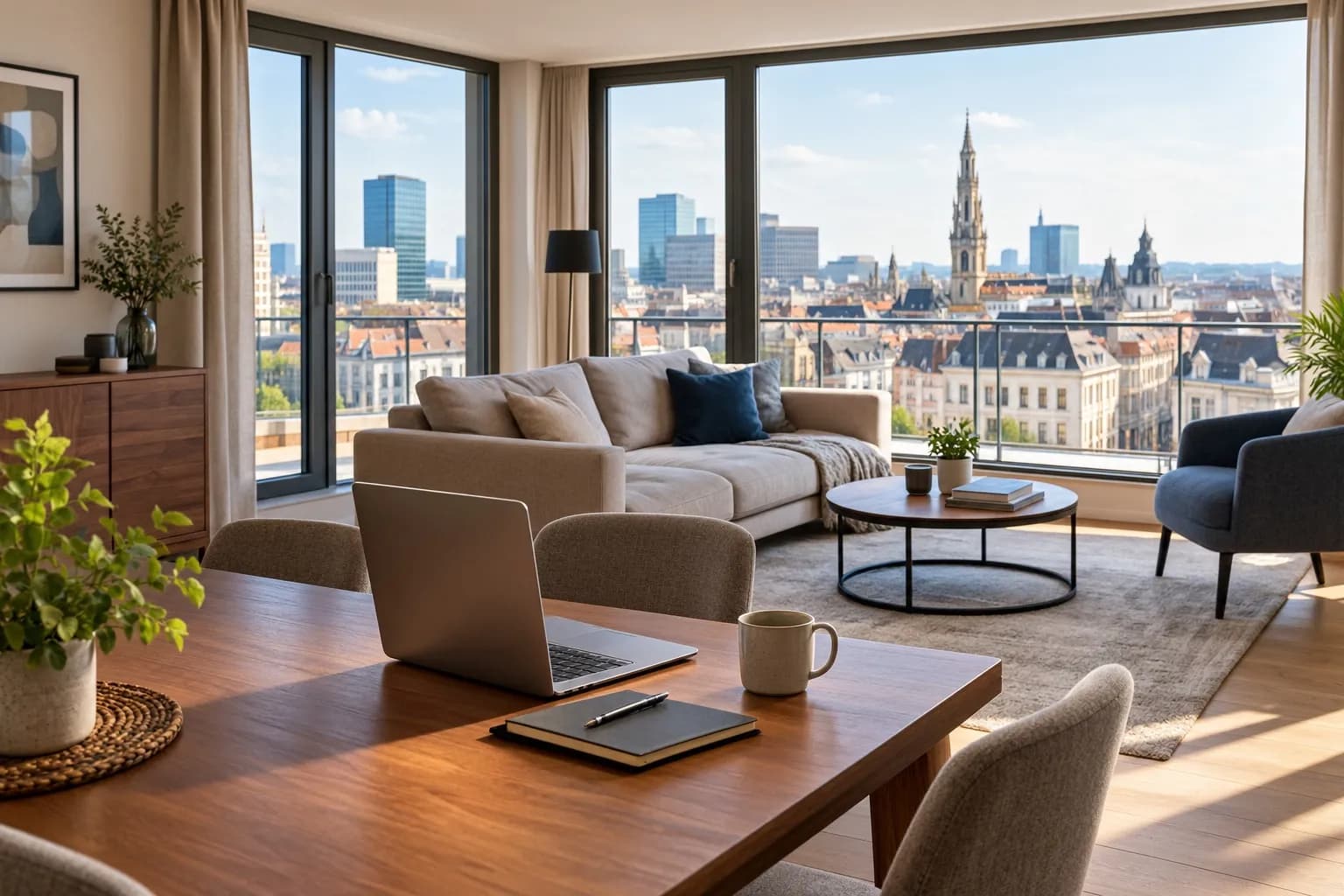
Corporate housing in Brussels is decided by one question that does not come up anywhere else in Belgium: how far is it from the European quarter. Brussels runs on postings, secondments and fixed-term assignments tied to institutions, and the geography of the city follows those institutions. This guide is for HR and mobility teams choosing where to place someone in Brussels, and what to expect from the market once they have.
Four distinct groups, and they behave differently.
EU institutions and the organisations around them. The Commission, the Parliament, the Council, and the agencies, permanent representations, trade bodies and consultancies that exist because they are here. Arrivals cluster around posting cycles rather than around the calendar year, and the start date is usually fixed months in advance and then does not move.
Diplomatic and NATO staff. Similar rhythm, different geography — households rather than individuals, longer stays, more attention to schools.
Consultants and project staff. Shorter assignments, later notice, and the group most likely to call on a Thursday about a Monday start.
Sports clubs. Players and coaching staff arriving mid-season. The club signs and pays; the player has no Belgian paperwork and often no Belgian bank account on arrival.
What these have in common is that an organisation decides and pays, and the person who will live in the apartment usually joins the conversation last.
Brussels is nineteen communes, and for a corporate placement only a handful genuinely matter. The right one depends on where the person works and whether they are arriving alone.
European quarter and Etterbeek. Walking distance to the institutions. The default for anyone on a short posting who will spend their days in the Berlaymont or the Parliament. Dense, modern stock, and the most competitive.
Ixelles. Immediately south, and the usual answer for someone who wants to live somewhere with a life of its own while staying within a short commute. Popular with younger staff and with the consultancy crowd.
Saint-Gilles. Art Nouveau, mixed, cheaper than Ixelles, and increasingly the choice for longer stays where character matters more than a five-minute commute.
Uccle. Green, residential, the international schools. This is where families go, and where diplomatic households tend to end up.
Woluwe-Saint-Pierre and Woluwe-Saint-Lambert. Quieter, east, well connected to the European quarter by metro. The compromise between Uccle's space and Etterbeek's convenience.
Outside the region. For teams rather than individuals, the municipalities in Flemish Brabant north of the city — twenty to thirty minutes out — offer houses with parking that the city simply does not have. For crews arriving with vehicles, this is often the only workable answer.
Rent out your apartment with Globexs

Notice. Institutional arrivals are usually known well in advance, and there is no reason to leave the housing until the last month. The requests that get difficult in Brussels are the consultancy ones: three people, ten days out, central.
Language. Brussels is officially bilingual French and Dutch, and in practice runs on French plus a great deal of English. For the commune, French is the safer assumption.
Cars. Brussels has a low-emission zone and the traffic to match. For a placement inside the city, public transport is usually faster than driving, and a parking space is worth more than an extra room. For a placement outside the ring, the reverse.
Schools. If a family is arriving, the school decides the district before anything else does. Ask about children before discussing neighbourhoods.
Registration with the commune. Anyone staying longer than three months is required to register. In Brussels the commune you register with is the one you live in, and processing times differ between them. Globexs apartments can be used as a registered address when the owner agrees: send a written request to your rental agent and we obtain the owner's written permission. Registration does not change the rent, the contract or the deposit. Full guide: registering with the commune in Belgium.
Brussels is institutional. The work is policy, diplomacy, regulation and the services around them, and the European quarter sets the map.
Antwerp is industrial and commercial — the port, petrochemicals, the diamond district, fashion. Demand moves in project waves. Corporate housing in Antwerp
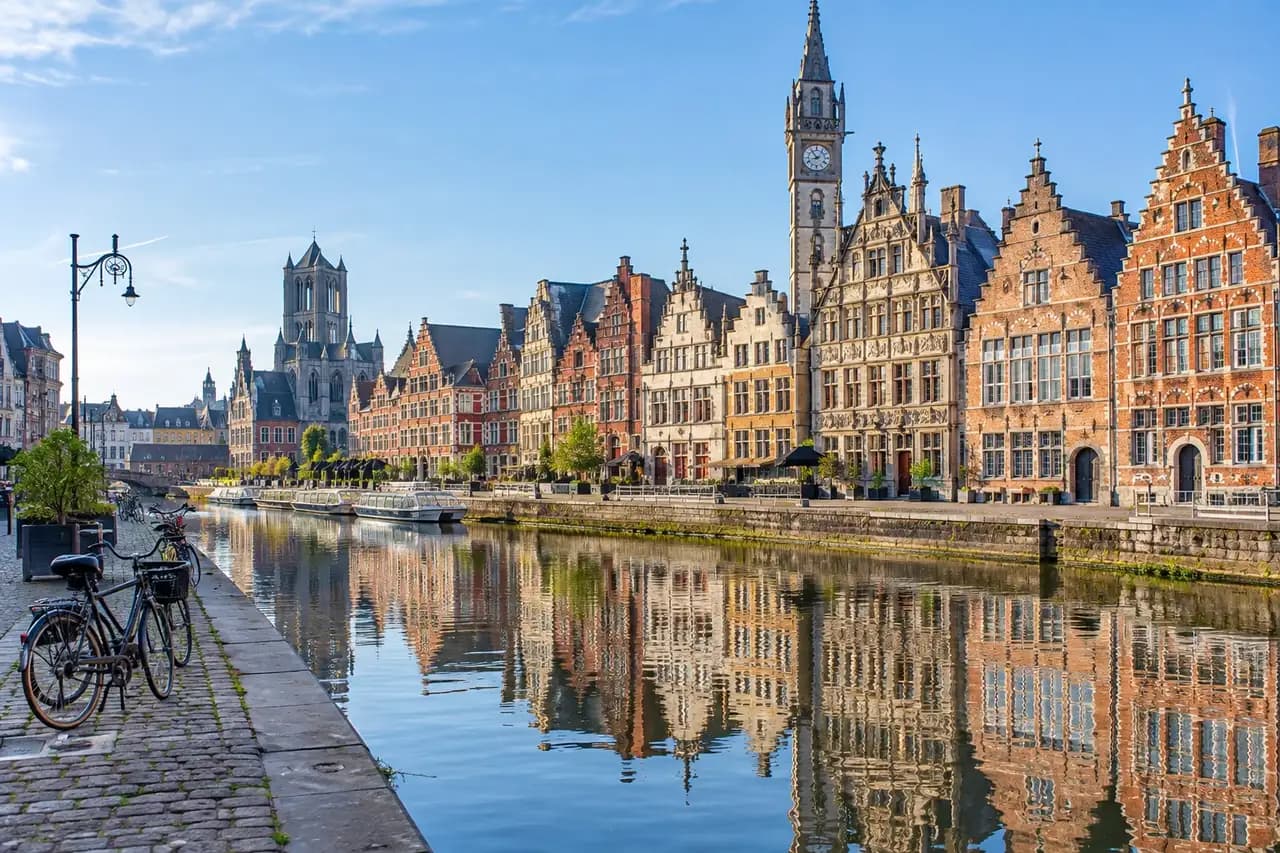
Ghent is the canal zone, Volvo, ArcelorMittal, biotech and the university, and it sits half an hour from both of the others. Corporate housing in Ghent
Companies placing staff in more than one of the three are handled as one account: corporate housing across Belgium.
Tell us the arrival date, the length of the assignment, where the person will be working and whether anyone is coming with them. Those four answers narrow the district faster than any list of preferences.
To see what is available now: furnished apartments in Brussels. For the offer itself, including team accommodation outside the city: temporary apartments in Brussels.
A furnished apartment rented to a company rather than to an individual, for the length of a posting or assignment rather than on a standard Belgian three-year lease.
The European quarter or Etterbeek for the shortest commute, Ixelles for somewhere with more life outside working hours, the Woluwes for a quieter option still on the metro.
Uccle and the Woluwes, because that is where the international schools are. With a family, choose the school first and the district second.
Yes. For teams arriving with vehicles, houses in the municipalities north of Brussels offer parking and space that the city centre cannot.
Institutional postings are usually known months ahead and are straightforward. Short-notice requests for several central apartments at once depend on availability that week.
No. The company is the contracting party and receives the invoice.
Brussels is officially bilingual French and Dutch. In practice French plus English covers daily life; for the commune, assume French.
From one to eleven months. Belgian law treats longer leases under a different regime.
Globexs has worked with companies relocating staff to Belgium since 2002. It was founded in Antwerp by Belgian entrepreneur Lodewijk Cuypers and today lists 135 furnished properties in Brussels, Antwerp and Ghent.