The best places to live in Antwerp
Antwerp is the second-largest city in Belgium and home to the Port of Antwerp-Bruges, one of the biggest ports in Europe. It draws engineers, traders, researchers and their families from all over the world, and almost all of them face the same first question: which part of the city should I live in?
Quick answer: families and long stays tend to choose Zurenborg, Berchem or Het Zuid. People working at the port or for shipping companies choose Het Eilandje, or Merksem and Ekeren for the northern terminals. Short corporate stays and the diamond trade suit the city centre. Commuters who drive and want more space for less money look at Linkeroever.
Moving to Antwerp? Our furnished apartments in Antwerp are all-in, from 1 to 11 months, and only an ID is needed to sign.
Area | Best for | Character | To Centraal Station |
|---|---|---|---|
Historic centre and diamond district | short stays, diamond professionals | lively, walkable, busy with visitors | on foot |
Het Eilandje | port and shipping teams, couples | converted docks, water, new-builds | about 15 minutes by tram or bike |
Het Zuid and Nieuw Zuid | creative professionals, families | museums, squares, restaurants | about 15 minutes by tram |
Zurenborg | families, longer assignments | Belle Époque streets, cafés | about 10 minutes by bike |
Berchem | commuters to Brussels, families | residential, own train station | one stop by train |
Borgerhout | younger professionals on a budget | diverse, energetic, central | about 10 minutes by tram |
Linkeroever | drivers, people who want space | green, calm, across the Scheldt | about 15 minutes by tram |
Merksem and Ekeren | northern port and chemical sites | residential, close to the terminals | 15 to 25 minutes |
The city of Antwerp is made up of ten districts. Most expats live in the district of Antwerp itself, which covers the historic centre, Het Eilandje, Het Zuid, Zurenborg and Linkeroever, or in the neighbouring districts of Berchem and Borgerhout. Borsbeek became the tenth district on 1 January 2025.
Two lines help to read the map. The Ring (R1) circles the inner city and divides the dense centre from the residential districts beyond it. The Scheldt river separates the right bank, where almost all of the city lies, from Linkeroever on the left bank. The port stretches north along the river and across to the left bank, so the best district for a port job depends on which side the terminal is on.
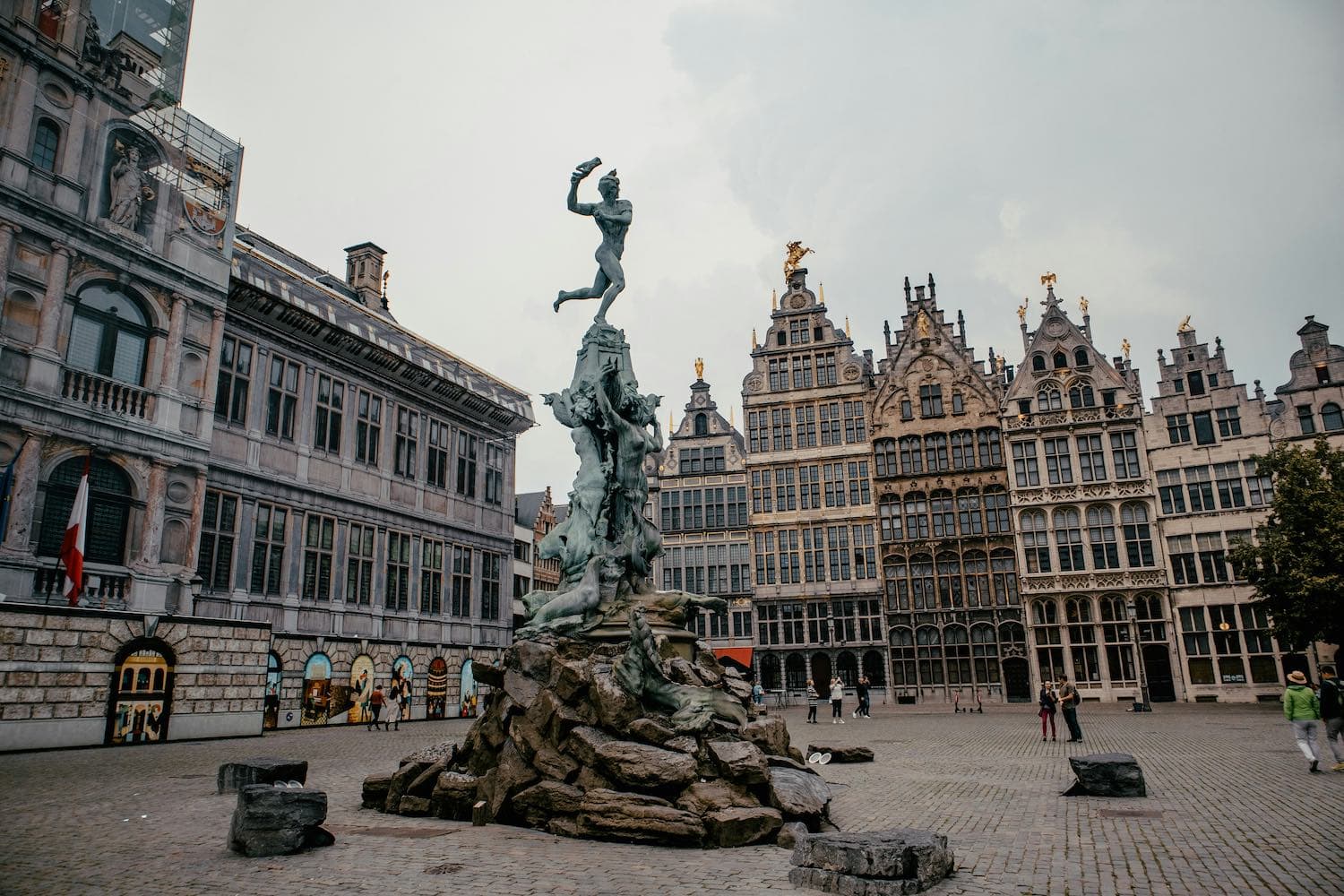
The cobbled streets around the Grote Markt, the cathedral and Het Steen are the Antwerp most visitors know. Living here means everything is on foot: shops, restaurants, the riverside and Centraal Station. Next to the station is the diamond district, one of the world's main centres for the rough diamond trade. For a short corporate stay or a diamond professional on rotation, the centre is hard to beat. For families, it is busier and noisier than most of the alternatives below.
Het Eilandje ("the little island") is the old dock area north of the centre, rebuilt over the last twenty years. Former warehouses now hold lofts and offices, and new apartment buildings line the Willem and Bonaparte docks. The MAS museum and the Red Star Line Museum anchor the area, and the marina gives it a calm, open feel. It is the natural choice for people who work for the port authority, shipping lines or logistics companies.
Rent out your apartment with Globexs

Het Zuid grew up around the Royal Museum of Fine Arts (KMSKA), which reopened in 2022 after a long renovation. Wide streets, squares, galleries and a dense choice of restaurants make it one of the most popular addresses for international residents. Nieuw Zuid, the new development along the river to the south, adds modern apartments and a park. The area is well served by trams and suits both professionals and families.
Zurenborg is famous for its Belle Époque and Art Nouveau houses, especially along the Cogels-Osylei. The streets are quiet, the squares around Dageraadplaats are full of café terraces, and Berchem station is a short walk away. It is one of the most sought-after areas for families and longer assignments, and prices reflect that.
Berchem sits just south-east of the Ring and has its own train station, with direct trains to Brussels in about 40 minutes. That makes it a practical base for anyone who splits their week between Antwerp and Brussels. The district is residential, with green pockets, local shops and good schools, and it borders Zurenborg.
Borgerhout, east of the centre, is one of the most diverse and energetic parts of the city. Turnhoutsebaan is lined with bakeries, grocers and restaurants from around the world. Rents are generally lower than in Zurenborg or Het Zuid, the centre is within cycling distance, and the area is popular with younger professionals.
Linkeroever, on the left bank of the Scheldt, is green, calm and residential, with views of the city skyline across the river. It is connected to the centre by tram and by the pedestrian Sint-Anna tunnel, and to the motorways towards Ghent and Bruges by road tunnel. Apartments are often more spacious for the money. It works well for people who drive to the left-bank port and chemical sites.
North of the centre, Merksem and Ekeren are the residential districts closest to the northern port terminals and the chemical cluster. Life here is quieter and more local. Ekeren is also home to the Antwerp International School, which makes it a common choice for families on longer contracts.
Deurne, to the east, is home to Antwerp Airport and has a strong neighbourhood feel. Wilrijk, to the south, is green and close to the university's Drie Eiken and Middelheim campuses. Hoboken, along the river to the south, is residential and well connected by tram. These districts offer more space and a slower pace, with a longer trip into the centre.
Low Emission Zone. Antwerp has a Low Emission Zone covering the city centre and Linkeroever. Check whether your car is allowed, or register a foreign car, before you drive in.
Getting around. Trams and buses are run by De Lijn, and the Velo shared bikes are everywhere in the centre. Many residents never need a car.
Registering. Anyone staying in Belgium for more than three months must register with the commune. In Antwerp, this is done at the district office of your address.
Timing. September is the busiest month for housing, as many new projects start after the summer. Start your search early if you arrive in autumn.
Globexs started in Antwerp: its founder, Lodewijk Cuypers, studied at the University of Antwerp, where in the late 1990s he began helping incoming students and expats find housing. Today we rent furnished apartments across the city for stays from 1 to 11 months, at one all-in monthly price that includes energy.
If you are not sure which district fits, send us your work address. The commute usually narrows the choice to two or three areas.
Ready to choose? See our furnished apartments in Antwerp or browse available apartments.
It depends on where you work. Het Zuid, Zurenborg and Berchem are the most popular with international families. Het Eilandje suits people working at the port or for shipping companies. The historic centre is best for short stays and the diamond trade.
Zurenborg, Berchem and Het Zuid offer quiet streets, parks and schools close to the centre. Families with children at the Antwerp International School often choose Ekeren.
Het Eilandje is closest to the port authority and many shipping offices. For the northern terminals and the chemical cluster, Merksem and Ekeren are the nearest residential districts. If your site is on the left bank, Linkeroever shortens the commute.
Yes. Direct trains from Berchem and Centraal Station reach Brussels in about 40 minutes, so many people live in Antwerp and commute to Brussels a few days a week.
Yes. Globexs rents furnished apartments in Antwerp for 1 to 11 months at an all-in monthly price, with energy included. Only an identity document is needed to sign.