Globexs

Retiring in Valencia, Spain: Is It a Good Idea?

Globexs helps people relocate to Valencia

Retiring in Valencia, Spain: Is It a Good Idea?

Updated: 26 October 2026

Yes, Valencia is a good place to retire for most people who want sun, a walkable city and moderate costs. Spain's third-largest city (840,792 residents, INE 2025) averages 17.6 °C over the year, ranked 1st for quality of life in the InterNations Expat City Ranking 2024, and a single person typically lives on about €1,300–1,800 a month. Retirees from outside the EU apply for the non-lucrative residence visa, which asks for proof of about €2,400 a month in financial means.

This guide covers the residence permit you need, healthcare, costs, where retirees live in and around Valencia, and the trade-offs to plan for. Globexs has had its head office in Valencia since 2010 and helps newcomers with furnished apartments and, through its legal department, with visas and NIE.

Why retirees choose Valencia

  • Climate. AEMET climate normals for Valencia airport show an average of 17.6 °C a year, winter days around 16 °C and between 160 hours of sunshine in December and 328 in July.
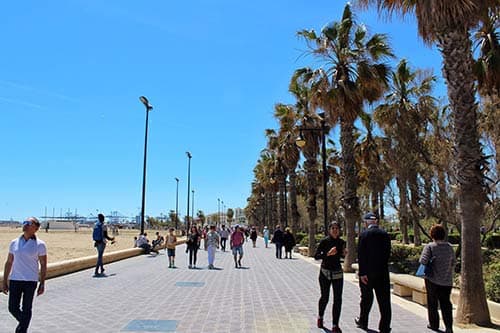
  • A city at human scale. Valencia is flat, compact and easy to cycle, with the Turia gardens running through the centre and city beaches a short tram ride away.
  • Quality of life for money. In the InterNations Expat City Ranking 2024 Valencia came 1st overall and 1st in both the Quality of Life and Personal Finance indices.
  • An international community. Foreign residents make up about one in five registered inhabitants (19.6% in the 2025 municipal register), so English-speaking clubs, events and services are easy to find. Globexs runs monthly community events for expats in Spain.

Residence: what you need to retire in Valencia

Your situationPermit or documentKey requirement
EU, EEA or Swiss citizen staying more than 3 monthsEU citizen registration certificate (CUE) and NIESufficient resources and health insurance if you do not work in Spain (official sheet 65)
UK or other non-EU citizenNon-lucrative residence visa, then TIE card400% of IPREM a month for the applicant (about €2,400) plus 100% (about €600) per family member, and health insurance from an insurer authorised in Spain (official sheet 6)
Receiving a UK State PensionS1 form for Spanish state healthcareResident in Spain and drawing a UK State Pension (GOV.UK)

IPREM is the Spanish public income index. Its monthly value of €600 was set in the 2023 State Budget and is still applied while that budget is extended. The non-lucrative visa is designed for people who live from pensions or savings rather than from work in Spain. Requirements change, so check the official sheet on the day you apply.

The Globexs legal department in Valencia prepares non-lucrative visa, CUE, NIE and TIE applications, and The Valencia Package combines housing with empadronamiento and NIE/TIE.

How much does it cost to retire in Valencia?

Our cost of living in Valencia guide puts a single person at about €1,300–1,800 a month and a couple at €2,200–2,900, with rent as the largest item. Eating out stays affordable thanks to the lunchtime menú del día, and public transport, markets and outdoor life keep everyday spending moderate. For the one-off costs of the move itself, see the cost of moving to Valencia in 2026.

Where to retire: the city or the province

"Valencia" can mean the city or the whole province, and each area suits a different retirement.

AreaLifestyleBest for
Valencia cityEverything on foot: hospitals, markets, culture, the beach by tramRetirees who want an active city life without a car
North: Bétera, Llíria, OlocauTowns at the foot of the Sierra Calderona, about half an hour from the cityHouses with gardens, quieter days, mostly Spanish neighbours
South coast: Cullera, GandiaBeach towns with established international communitiesSea views and a familiar language around you
Inland west: Requena, UtielWine country of the Utiel-Requena area, rural and Castilian-speakingSpace, local food and wine, learning Spanish
Albufera and the rice fieldsVillages of the Albufera Natural Park, the home of paellaTraditional Valencian life with few expats

Inside the city, Pla del Real, Benimaclet and the beach districts are retiree favourites. We compare them in the best neighbourhoods in Valencia to retire.

Try it before you commit

Our oldest advice still holds: live in the area for a while before you buy or sign a long lease. A furnished apartment for a few months lets you test the summer, the neighbourhood and the commute to your doctor, and gives you a local address for empadronamiento and NIE. Globexs rents furnished apartments in Valencia on 1 to 11 month contracts with rent, utilities and internet on one monthly invoice, and offers long-term rentals once you know where you want to stay.

What to plan for

  • Summer heat. July and August average highs of about 31 °C with humid air; many retirees spend part of the summer inland or travelling.
  • Paperwork in Spanish. Appointments for NIE, TIE and the town hall are in Spanish, which is where a local legal team saves time.
  • Fallas in March. Five days of fireworks and crowds in the centre: unforgettable for some, a good moment for a trip for others.
  • City-centre noise. Ciutat Vella is lively until late; quieter districts are a short tram or metro ride away.

Frequently asked questions

Is Spain a good place to retire?

For many Europeans and British retirees, yes: a mild climate, a well-regarded health system and living costs below most of northern Europe. Valencia adds a large city's services at a calmer pace than Madrid or Barcelona.

Can I retire in Valencia if I am from the UK or outside the EU?

Yes, usually with the non-lucrative residence visa, which requires about €2,400 a month in financial means for the applicant and private or public health insurance from an insurer authorised in Spain. UK State Pension recipients may also be able to use an S1 form for state healthcare.

How much money do I need to retire in Valencia?

Plan on about €1,300–1,800 a month for a single person and €2,200–2,900 for a couple, rent included. Non-EU applicants must also meet the visa threshold of 400% of IPREM, about €2,400 a month.

Do I need to speak Spanish to retire in Valencia?

You can manage daily life in English in the city and on the coast, but basic Spanish makes healthcare, paperwork and friendships much easier. Valencian is the second official language, and inland towns such as Requena speak Castilian Spanish.

Is it better to retire in Valencia city or on the coast?

The city suits retirees who want to live without a car and close to hospitals and culture; the coast and the northern towns suit those who want space and quiet. Renting furnished for a few months in each is the easiest way to decide.

Planning your move? See furnished apartments in Valencia, read things I wish I knew before moving to Valencia, or contact Globexs for a free quotation.

Property Owners

Discover the Benefits of Expat Rentals

Rent out your apartment with Globexs

Property owners meeting