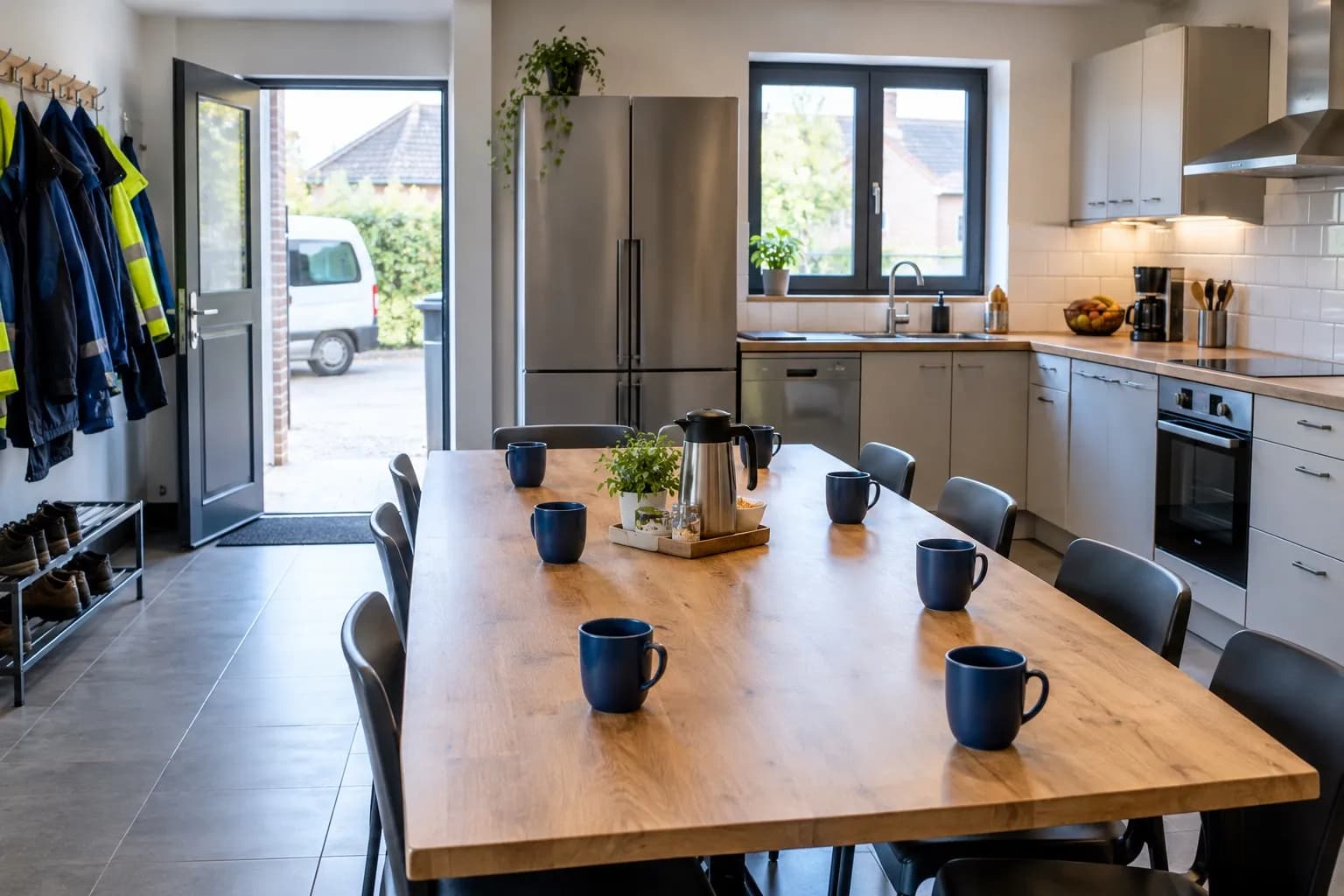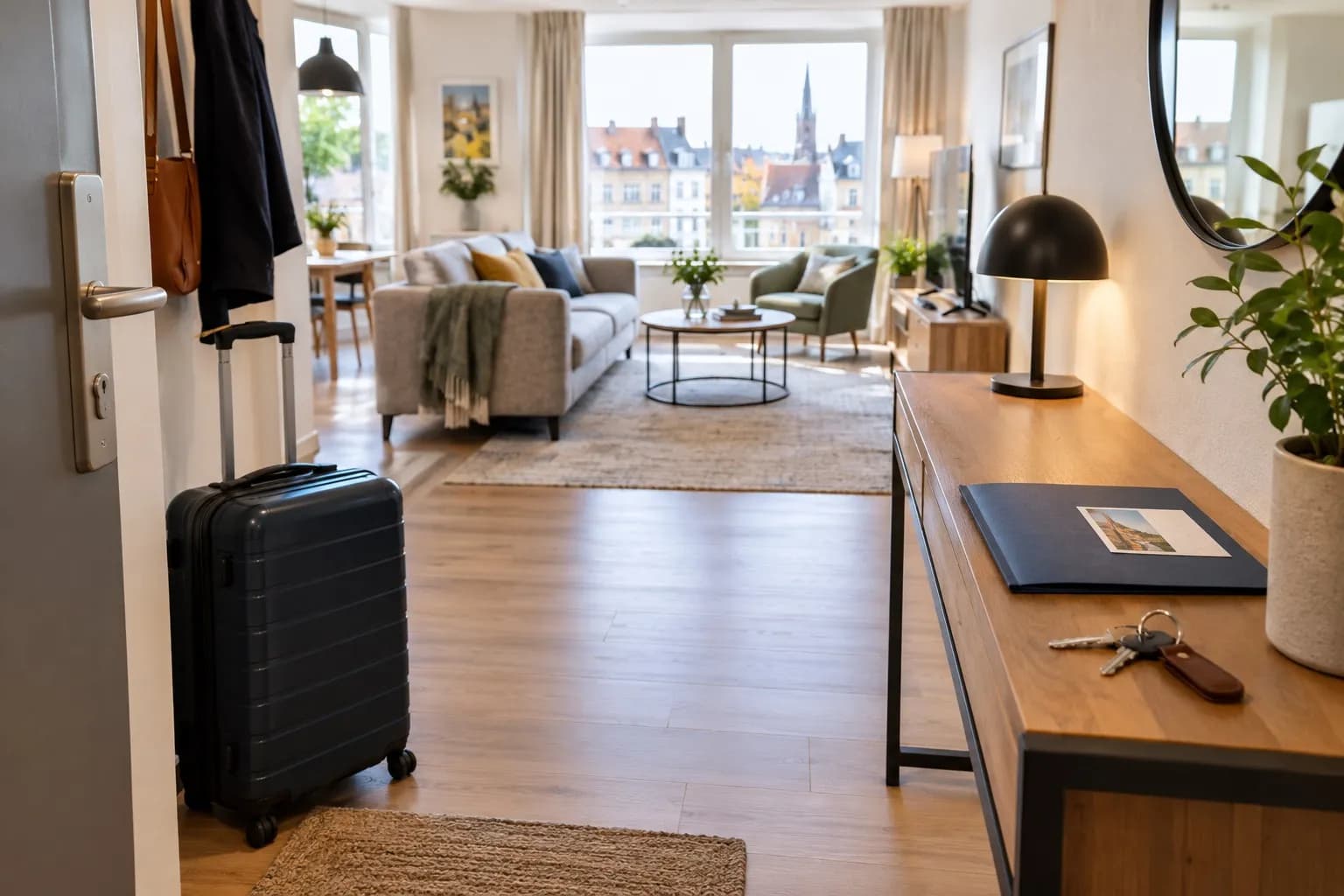



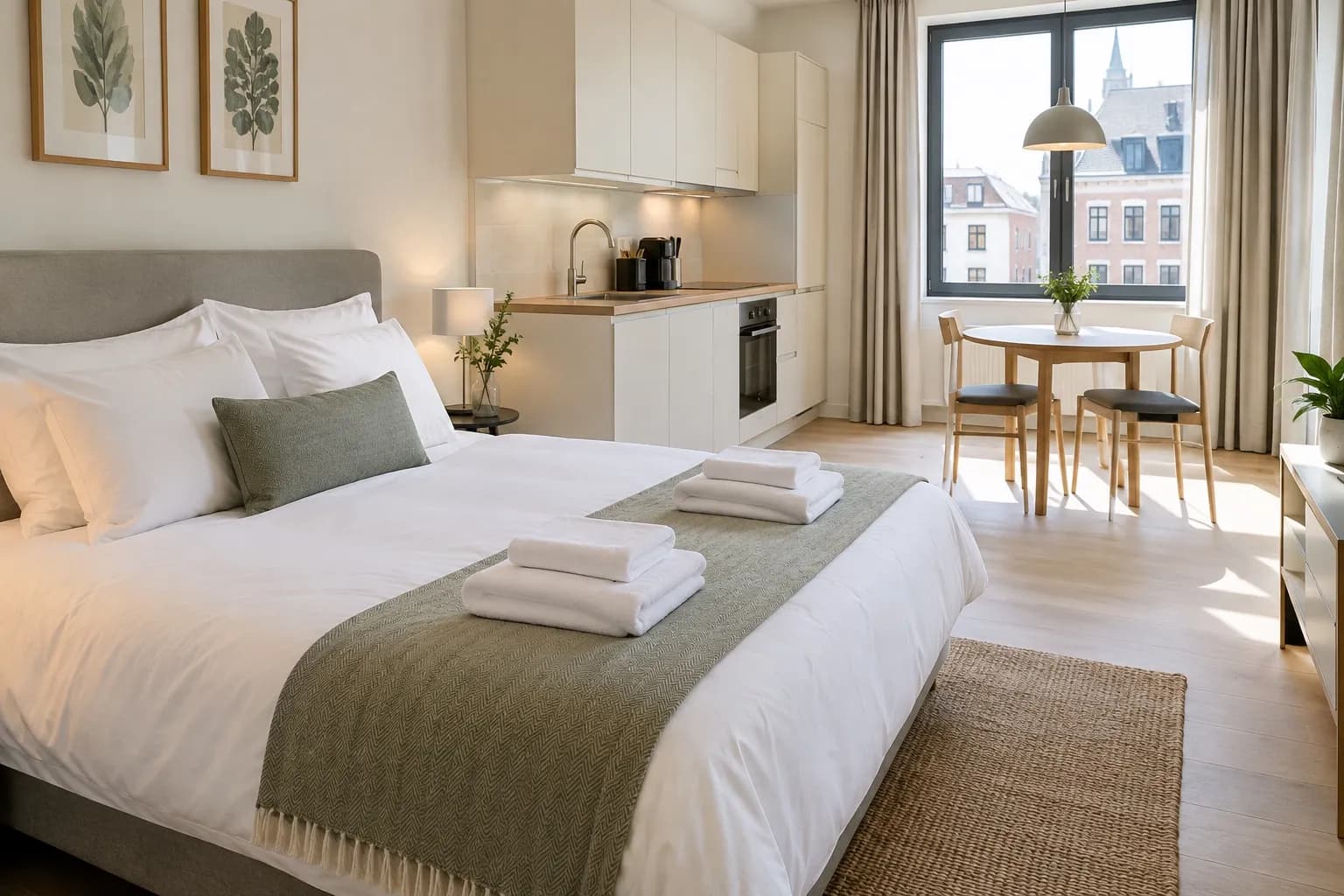
When HR teams search for serviced apartments in Belgium, they are usually looking for one of four different products under one name: a serviced apartment, corporate housing, an aparthotel, or a furnished mid-term rental. The labels overlap, providers use them loosely, and the differences that matter to an employer — contract length, cleaning, whether the employee can register an address, how the invoice arrives — are rarely on the listing. This guide separates the four, puts them side by side, and says plainly where Globexs sits.
Four labels, four different products
The four terms describe different levels of service and different contracts, not just different marketing.
Serviced apartment. A furnished apartment with some hotel-style services on top: regular cleaning, often a linen change, sometimes a reception or a 24-hour contact. The term comes from the UK market and has no legal definition in Belgium, so what "serviced" means varies from building to building.
Aparthotel. A hotel that sells apartments instead of rooms. There is a reception, housekeeping on a set schedule, booking by the night, and the guest is a hotel guest rather than a tenant.
Corporate housing. A furnished apartment or house rented to a company for the length of an assignment. The company is usually the contracting party, the stay is counted in months, and services beyond the apartment itself vary by provider.
Furnished mid-term rental. A furnished home on a contract of roughly one to eleven months, between a holiday let and a standard Belgian lease. In practice most corporate housing in Belgium is a furnished mid-term rental with a company on the contract.
Side by side
The quickest way to choose is to compare what each product includes and how it is contracted.
Serviced apartment | Aparthotel | Corporate housing | Furnished mid-term rental | |
|---|---|---|---|---|
Typical contract | from a few nights to several months | per night, hotel terms | one to several months, company contract | one to eleven months |
Minimum stay | varies, often a few nights | usually one night | often one month | usually one month |
What is included | furniture, utilities, some services | furniture, utilities, hotel services | furniture, utilities, varies by provider | furniture; utilities depend on the provider |
Cleaning | regular, often weekly | on a hotel schedule | depends on the property | usually none, tenant's responsibility |
Address registration with the commune | depends on the operator | generally not possible | depends on provider and owner | depends on the owner |
Invoicing | per stay or per month | per stay, hotel invoice | usually monthly, to the company | monthly, to whoever signed |
These are market tendencies, not rules. Two properties sold under the same label can sit in different columns, which is why the questions in the next section matter more than the label.
The questions that separate them
Five questions tell you what you are really booking, whatever the listing calls it.
Is this a tenancy or a hotel stay? A tenant has an address and a contract. A hotel guest has a booking. The difference decides the next question.
Can the employee register with the commune at this address? Anyone staying in Belgium for more than three months has to register, and you cannot register at a hotel. Ask in writing before signing. Details: registering with the commune in Belgium.
What exactly does "serviced" include, and how often? Cleaning every day, every week and every two weeks are three different products.
Are utilities in the price, and is there a cap? "Utilities included" sometimes means included up to a monthly amount, with the rest billed afterwards.
Who receives the invoice, how often, and for what? Finance teams want to know this before the first invoice arrives, not after.